


Men’s and Women’s Bags – What Distinguishes Them
Choosing the perfect bag can feel surprisingly complicated when balancing style with practicality. For fashion-focused professionals and students across the United Kingdom, understanding the subtle yet important contrasts between men’s and women’s bags is more than just a matter of taste. From anatomical adaptations like narrower shoulder straps and shorter torso lengths in women’s designs to robust construction and broader straps in men’s accessories, gender-specific bag design shapes comfort, organisation, and everyday usability in distinctive ways.
Table of Contents
- Defining Men’s And Women’s Bags
- Design Variations And Structural Differences
- Functional Features And Organisation Priorities
- Style, Aesthetics, And Material Choices
- Fit, Comfort, And Ergonomic Considerations
- Cost, Durability, And Everyday Usability
Key Takeaways
| Point | Details |
|---|---|
| Gender-Specific Designs | Men’s and women’s bags differ significantly in ergonomic design, accommodating distinct body shapes and comfort needs. |
| Functional Features | Women’s bags often prioritise multiple compartments for organisation, while men’s bags favour fewer, larger sections for efficiency. |
| Material and Construction | Choices in materials and construction techniques reflect the intended use and durability requirements of each bag type. |
| Personalisation Over Gender Norms | Selecting bags should prioritise personal comfort and functionality, challenging traditional gender categorisations. |
Defining men’s and women’s bags
Bags are far more than simple accessories - they represent functional and design-specific solutions tailored to different anatomical needs and style preferences. While many might assume bags are universal, gender-specific bag design actually involves intricate considerations of body shape, comfort, and practical requirements.
The fundamental distinctions between men’s and women’s bags emerge from several critical factors:
- Physical Ergonomics: Anatomical design differences require specific strap placements and contouring
- Size and Proportions: Variations in torso length, shoulder width, and hip structure influence bag geometry
- Aesthetic Preferences: Different stylistic expectations and cultural norms impact design choices
Women’s bags typically feature narrower shoulder straps, strategically positioned chest straps, and shorter torso lengths. These design adaptations account for unique female body characteristics, including breast and hip configurations. By reimagining bag structures, manufacturers create accessories that distribute weight more effectively and reduce physical strain.
Men’s bags, conversely, tend to prioritise robust construction, broader straps, and more angular designs. These characteristics reflect traditional masculine aesthetic preferences and practical requirements for carrying professional equipment or outdoor gear.
Design is never neutral - it always represents specific user needs and embodied experiences.
Physical Comfort Considerations play a significant role in bag differentiation. Ergonomic adjustments like curved straps, strategically placed chest closures, and proportional hip belts transform bags from mere carrying solutions into personalised ergonomic tools.
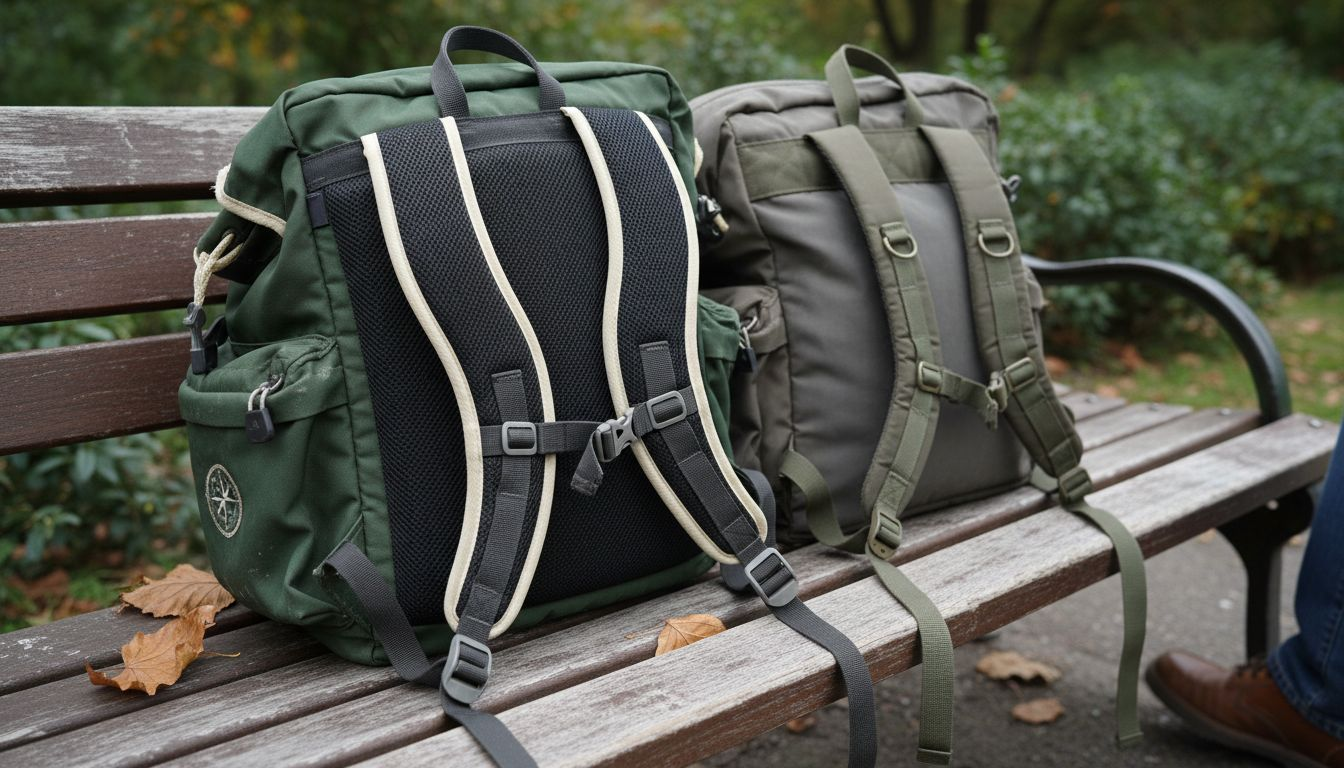
To clarify the main contrasts between men’s and women’s bags, see the summary below:
| Design Aspect | Women’s Bags | Men’s Bags |
|---|---|---|
| Strap Style | Narrow, contoured for closer fit | Broad, straight for wider shoulders |
| Torso Fit | Shorter length for smaller frames | Longer length for taller frames |
| Organisational Focus | Multiple internal compartments | Fewer, larger sections |
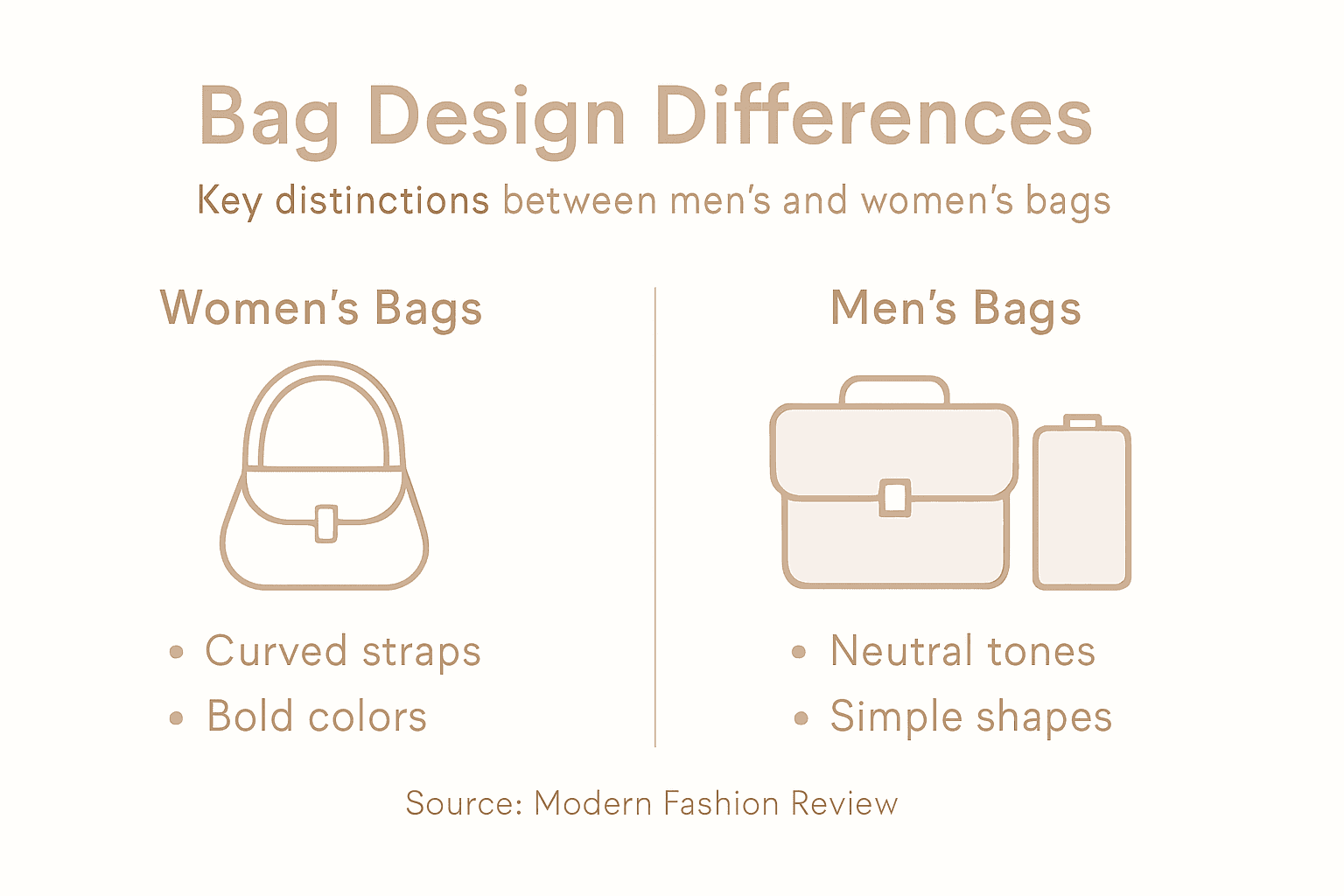
| Aesthetic Approach | Decorative elements, varied colours | Minimalist, neutral palette |
| Load Bearing Design | Weight spread over hips and chest | Weight focused on shoulders |
Pro tip: When selecting a bag, prioritise personal comfort and functionality over strict gender categorisations, as individual body shapes vary considerably beyond generic male/female classifications.
Design variations and structural differences
The structural design of bags goes far beyond mere aesthetic considerations, representing a complex intersection of functionality, ergonomics, and purpose-specific engineering. Structural variations fundamentally distinguish different types of bags, from delicate fashion accessories to robust outdoor equipment.
Key structural design elements include:
- Material Selection: Fabric strength, flexibility, and water resistance
- Construction Techniques: Specialised stitching methods
- Load Distribution: Strap design and padding configurations
- Purpose-Specific Modifications: Tailored features for specific activities
Backpacks illustrate these design nuances most comprehensively. Structural differences in backpack design reveal intricate anatomical considerations. Women’s backpacks typically feature shorter torso lengths, narrower hip belts, and strategically positioned shoulder harnesses that accommodate female body structures more effectively.
Men’s bags often prioritise robust construction with broader straps, more angular geometries, and increased load-bearing capacities. These design choices reflect traditional masculine preferences for durability and functional performance.
Engineering follows form, but design follows function.
Construction techniques play a crucial role in bag differentiation. Specialized stitching, reinforced stress points, and ergonomic contours transform bags from simple carrying devices into sophisticated personal infrastructure.
Pro tip: Always examine a bag’s structural details closely, as subtle design variations can dramatically impact comfort and usability.
The following table outlines how purpose impacts material and construction priorities for different bag types:
| Use Case | Material Preference | Construction Focus |
|---|---|---|
| Everyday Office | Leather or canvas | Sleek, reinforced seams |
| Outdoor Hiking | Technical synthetics | Padded support, water resistance |
| Evening Fashion | Embellished textiles | Lightweight, decorative stitching |
| Sport/Gym | Durable nylon or mesh | Ventilated, washable structure |
Functional features and organisation priorities
Bag design transcends aesthetics, representing a sophisticated dialogue between user needs and functional requirements. Ergonomic considerations fundamentally shape how bags are conceptualised, constructed, and organised to serve diverse practical demands.
Key functional priorities differ significantly between men’s and women’s bags:
- Compartment Configuration: Strategic pocket placement
- Accessibility Design: Ease of item retrieval
- Weight Distribution: Balanced load management
- Personal Item Accommodation: Tailored storage solutions
Bag design reflects broader lifestyle considerations, with women’s bags typically featuring more intricate internal organisation. These designs often include multiple compartments for makeup, accessories, personal hygiene items, and technology, emphasising versatility and detailed storage solutions.
Men’s bags, by contrast, frequently prioritise simplicity and capacity. They tend to feature larger, more uniform compartments designed for straightforward storage of professional equipment, technological devices, and essential items. The focus remains on functional efficiency rather than elaborate internal segmentation.
Functionality is the poetry of practical design.
Adjustable features play a crucial role in modern bag design. Adaptable straps, modular compartments, and ergonomic contours allow bags to respond dynamically to individual user requirements, transcending traditional gender-specific limitations.
Pro tip: Select a bag that adapts to your specific lifestyle needs, rather than conforming to generic gender expectations.
Style, aesthetics, and material choices
Bag aesthetics represent a complex interplay between cultural expression and personal identity. Style reflects societal trends that extend far beyond simple visual preferences, revealing intricate narratives about gender, functionality, and individual expression.
Key aesthetic differentiations include:
- Colour Palette: Men’s subdued tones versus women’s diverse chromatic ranges
- Decorative Elements: Minimalist designs versus intricate embellishments
- Material Texture: Rugged versus refined surface treatments
- Ornamental Complexity: Simple versus elaborate design approaches
Historical bag evolution demonstrates how material choices reflect changing social dynamics. Women’s bags traditionally incorporated elaborate details like embroidery and beadwork, transforming accessories into artistic statements. Contemporary designs continue this legacy, balancing aesthetic appeal with practical functionality.
Men’s bags predominantly emphasise durability and understated elegance. Neutral colour palettes, streamlined silhouettes, and robust materials communicate professional competence and practical efficiency. The aesthetic language speaks of utility rather than ornamental complexity.
Design is the silent ambassador of function and style.
Modern bag design increasingly challenges traditional gender-specific aesthetic boundaries, celebrating individual expression over rigid categorical distinctions.
Pro tip: Select bag materials and styles that authentically represent your personal aesthetic, transcending conventional gender design expectations.
Fit, comfort, and ergonomic considerations
Ergonomic design is the silent language of comfort, translating complex anatomical differences into functional bag solutions. Bag ergonomics reveal intricate strategies for addressing individual physical variations that extend far beyond generic, one-size-fits-all approaches.
Key ergonomic considerations include:
- Strap Configuration: Tailored shoulder and chest strap placements
- Weight Distribution: Optimised load management techniques
- Body Contour Alignment: Curved harness designs
- Pressure Point Reduction: Padded support zones
Personalised fit strategies demonstrate remarkable attention to anatomical nuance. Women’s bags typically feature narrower shoulder straps, strategically positioned sternum closures, and shorter bag lengths that accommodate smaller torso dimensions and differently shaped hips.
Men’s bags emphasise broader, more robust strap configurations designed to distribute heavier loads across wider shoulder structures. The ergonomic philosophy prioritises stability and load-bearing capacity, reflecting traditional masculine physical expectations.
Comfort is not a luxury; it’s an essential design imperative.
Modern bag design increasingly challenges rigid gender-specific ergonomic assumptions, recognising that individual body variations transcend binary categorisations.
Pro tip: Always test a bag’s fit dynamically, moving and adjusting straps to ensure personalised comfort before making a purchase.
Cost, durability, and everyday usability
Bag selection represents a nuanced balance between financial investment and long-term functionality. Material choices and durability fundamentally determine a bag’s lifecycle, performance, and overall value proposition for everyday users.
Key considerations in cost and durability include:
- Material Quality: Impact on longevity and performance
- Construction Techniques: Structural reinforcement strategies
- Usage Frequency: Wear and tear expectations
- Cost-to-Durability Ratio: Financial efficiency of design
Pricing dynamics in bag design reveal complex interactions between aesthetic complexity and functional requirements. Women’s bags often incorporate decorative elements that incrementally increase cost, while men’s designs prioritise robust construction and simplified manufacturing processes.
Men’s bags typically emphasise utilitarian design, featuring more standardised materials and construction methods that reduce production costs while maintaining structural integrity. This approach enables more predictable pricing and durability expectations.
Intelligent design transcends price points, delivering genuine value.
Modern consumers increasingly demand bags that balance aesthetic appeal, functional performance, and reasonable pricing, challenging traditional market segmentation.
Pro tip: Evaluate a bag’s value through its construction details, material quality, and intended usage rather than relying solely on brand reputation or pricing.
Discover Bags That Truly Understand Your Needs
The article highlights how men’s and women’s bags differ based on ergonomic design, functional organisation, and aesthetic preferences. Whether it is the narrower straps and multiple compartments preferred in women’s designs or the robust construction with minimalist style often sought by men, the key is comfort, durability and purpose. Pain points such as uneven weight distribution and lack of personalised fit are common challenges that Troop London expertly addresses through craftsmanship focused on anatomical fit and timeless style.
Explore a collection that emphasises:
- Functional design tailored for everyday comfort
- Durable, sustainable materials that withstand daily wear
- Stylish vintage-inspired aesthetics suitable for every lifestyle
Experience the difference of a bag that respects your body and your style. Browse the range of versatile canvas backpacks, crossbody bags and messenger bags that combine traditional craftsmanship with modern ergonomic principles at Troop London.

Find your perfect companion today and enjoy exclusive offers with every purchase. Dive into the world of purposeful accessories at Troop London. Transform how you carry your essentials with style and comfort that lasts.
Frequently Asked Questions
What are the main differences between men’s and women’s bags?
Men’s and women’s bags differ primarily in their ergonomic design, size, proportions, and aesthetic preferences. Women’s bags typically feature narrower shoulder straps and shorter torso lengths to accommodate female body shapes, while men’s bags often have broader straps and more angular designs prioritising durability and function.
How does ergonomic design affect the choice of bags for men and women?
Ergonomic design is crucial as it addresses anatomical differences. Women’s bags often include tailored strap placements and weight distribution methods that complement their body structure, while men’s bags emphasise broader straps for stability and support, making them comfortable for different physical needs.
Why are women’s bags often designed with more compartments compared to men’s bags?
Women’s bags are typically designed with more compartments to facilitate organisation for various personal items, such as makeup and accessories. In contrast, men’s bags often focus on larger, uniform compartments for straightforward storage of professional and essential equipment, driving functional efficiency.
What materials are commonly used in men’s and women’s bags, and how do they impact durability?
Material choices significantly influence a bag’s durability and usability. Women’s bags often incorporate decorative textiles that can increase cost but also enhance aesthetic appeal, while men’s bags typically rely on robust materials designed for longevity and practicality, ensuring they withstand daily wear and tear.
Recommended
- Carrying Style - Reasons Why Women Love Handbags So Much – Troop London
- 4 Categories of Men’s Bags That Every Man Should Own – Troop London
- The Best Men’s Bag for Work That You Should Consider – Troop London
- Men’s Bags - How to Fix Common Mistakes in Wearing Them – Troop London
- WEEKENDER FINE CROSS – LM Fashion Online Store