



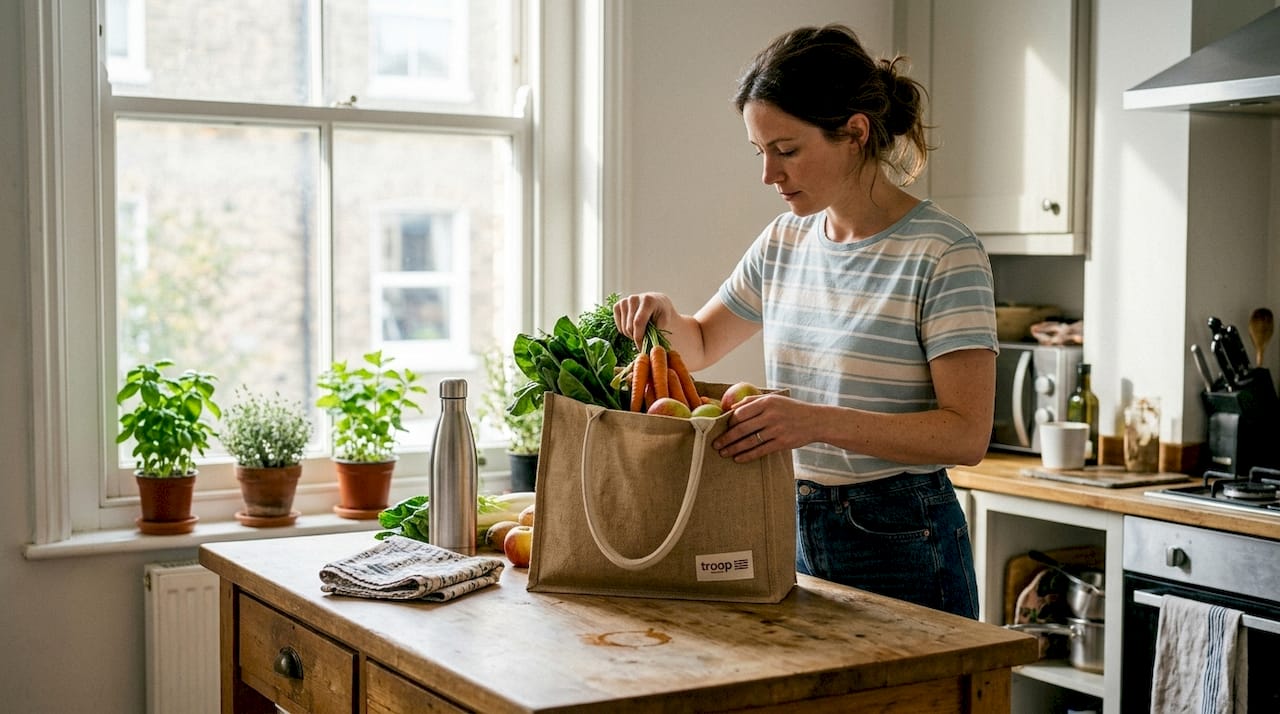
What is an eco-friendly bag? Guide to sustainable style
TL;DR:
- True eco-friendly bags minimize environmental impact throughout their lifecycle, emphasizing durability and sustainable sourcing.
- Sustainable materials like hemp and PHA offer durability and biodegradability, but proper use and end-of-life planning are crucial.
- Habits such as long-term use, proper care, and verifying certifications are key to maximizing a bag’s environmental benefits.
Not every reusable bag is created equal. It’s tempting to assume that swapping a plastic carrier for any fabric tote automatically makes you an eco-conscious shopper, but the reality is far more nuanced. The material, how it was made, how long it lasts, and what happens to it at the end of its life all determine whether a bag is genuinely sustainable or simply greenwashed. This guide cuts through the noise. You’ll learn what truly makes a bag eco-friendly, which materials hold up best, how to spot misleading claims, and how to choose something that serves both your values and your wardrobe for years to come.
Table of Contents
- What makes a bag eco-friendly?
- Top sustainable materials: Pros, cons and what to look for
- Beyond materials: Durability, style and lifecycle impact
- How to choose the right eco-friendly bag for everyday and travel
- Why the real secret to an eco-friendly bag is in how you use it
- Find your perfect eco-friendly bag with Troop London
- Frequently asked questions
Key Takeaways
| Point | Details |
|---|---|
| True eco-friendly definition | A real eco-friendly bag uses sustainable materials, is highly durable, and has a clear end-of-life pathway. |
| Material matters—but so does use | Hemp, rPET, and PHA offer sustainable choices, but using any bag thoroughly is what cuts environmental harm. |
| Certifications signal authenticity | Look for and verify GOTS and GRS certifications to avoid being misled by greenwashed products. |
| Style and sustainability align | Modern eco-friendly bags can be both fashionable and environmentally responsible for daily and travel use. |
What makes a bag eco-friendly?
The term “eco-friendly” gets thrown around a lot, but it has a real meaning worth understanding. At its core, eco-friendly bags minimise environmental impact across their entire lifecycle, from raw material extraction through to manufacture, daily use, and eventual disposal. That last part is critical. A bag made from organic cotton that ends up in landfill after six months is not a sustainable choice, no matter how natural the fibre.
So what are the actual criteria? A genuinely eco-friendly bag should meet most of the following:
- Made from renewable, recycled, or biodegradable materials
- Produced using non-toxic dyes and chemical processes
- Sourced from suppliers with verified ethical and environmental standards
- Built to last, so it can be used repeatedly over many years
- Designed with a clear end-of-life pathway, whether composting, recycling, or a take-back scheme
These key eco-criteria include durability and sustainable sourcing alongside non-toxic composition and reduced carbon footprint. Crucially, durability is not optional. A bag that falls apart after a season forces you to buy another one, which doubles the environmental cost.
“The most sustainable bag is the one you already own and keep using.” This principle holds true across every material and price point.
Here is where things get interesting. Hemp, for example, is one of the most durable natural fibres available. Hemp bags can last for decades when well cared for, genuinely outlasting many synthetic alternatives. That longevity is precisely what makes them such a strong eco-choice. If you want to understand more about how sustainable bag design works in practice, the principles of durability and considered construction are always at the centre of it.
Think of it this way: a bag is not a single purchase. It is an ongoing relationship. The more you use it, the more its initial environmental cost is spread across each use, shrinking your per-use footprint steadily over time.
Top sustainable materials: Pros, cons and what to look for
Having defined what makes a bag genuinely eco-friendly, it is time to look at the materials that best fit these criteria and how to weigh your options.
Eco-friendly bags are made from materials such as organic cotton, hemp, jute, rPET, cork, and PHA, each with its own strengths. Here is a practical comparison:
| Material | Key strength | Watch out for |
|---|---|---|
| Organic cotton | Renewable, soft, widely available | Water-intensive to grow |
| Hemp | Ultra-durable, fast-growing, low pesticide use | Can feel stiff initially |
| rPET | Made from recycled plastic bottles, great for travel | Still sheds microfibres |
| Jute | Biodegradable, low cost | Less water-resistant |
| Cork | Lightweight, naturally water-resistant | Limited bag styles |
| PHA | Fully biodegradable, no fossil fuels | Niche availability |
Hemp and PHA score highly for durability and full biodegradability, while rPET and organic cotton remain accessible and widely certified options. Each material has a role to play depending on your priorities.
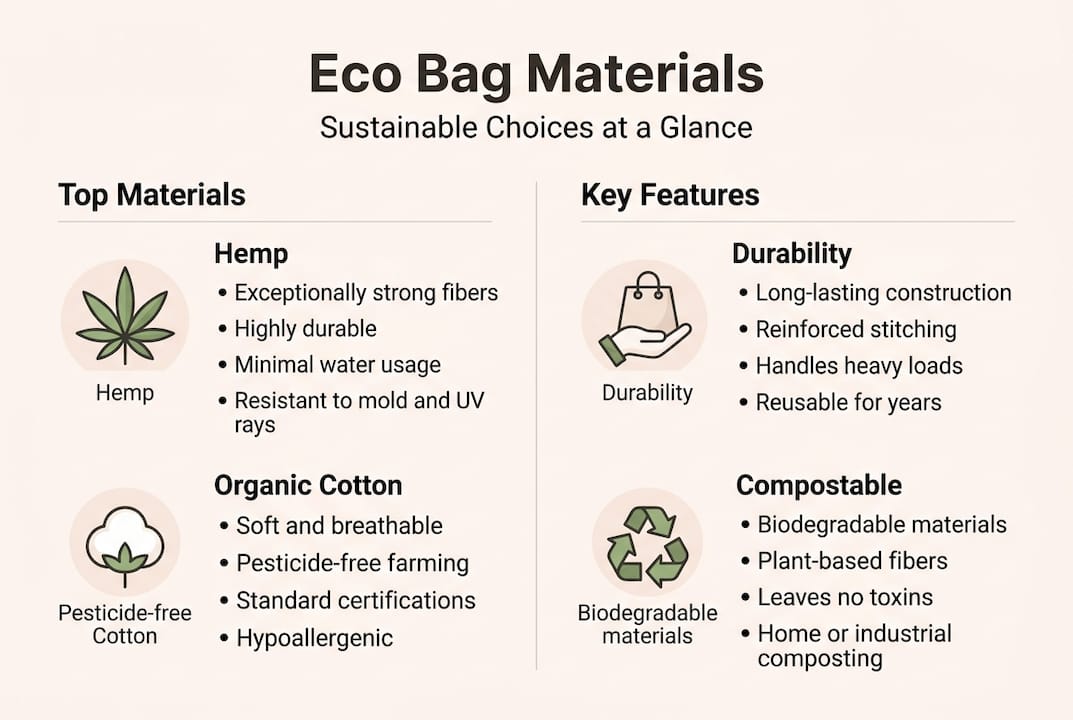
Pro Tip: Look for certifications such as GOTS (Global Organic Textile Standard) for organic fibres or GRS (Global Recycled Standard) for recycled content. Verify these using official certification directories rather than taking a brand’s word for it.
One material worth approaching carefully is PLA (polylactic acid), a plant-based plastic that sounds promising but requires industrial composting facilities to break down properly. In a standard home compost bin or landfill, it behaves much like conventional plastic. Understanding bag materials explained in full helps you avoid these kinds of traps.
When it comes to style, the good news is that sustainable materials have come a long way. Hemp canvas now has a beautifully worn, vintage aesthetic. Organic cotton totes come in refined neutral tones. rPET fabrics can be woven to look sleek and technical. The features of durable bags worth prioritising include reinforced stitching, quality hardware, and a gsm (grams per square metre) above 180 for canvas, which signals genuine density and longevity.
Beyond materials: Durability, style and lifecycle impact
The material is only half the story. What you do with your bag and how long it lasts matters just as much, if not more.
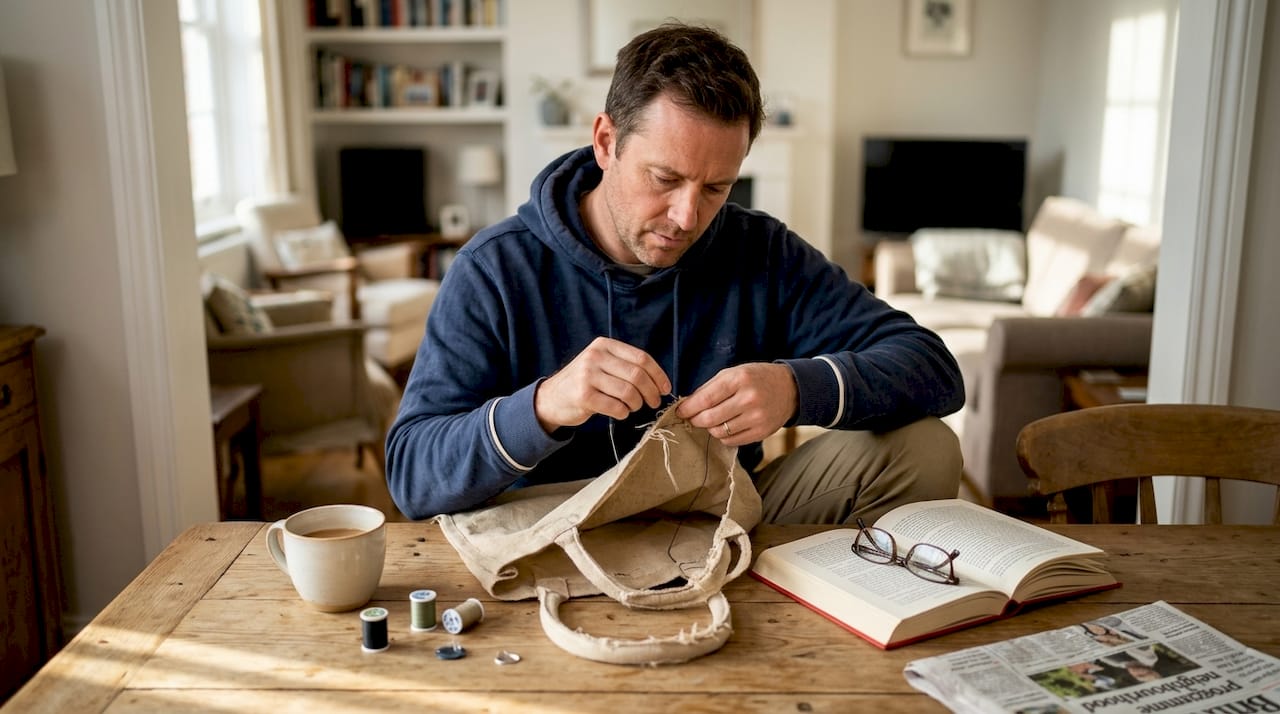
Reusable bags need 100 or more uses to break even on a full lifecycle analysis compared to single-use alternatives. That figure might surprise you. It means a beautiful organic cotton tote used twice a week for a year is genuinely earning its eco-credentials. The same bag used a handful of times before being forgotten at the back of a cupboard is not.
Durability is therefore a sustainability issue, not just a quality one. When shopping, look for:
- Reinforced seams and bar-tack stitching at stress points
- Canvas weight above 180 gsm for everyday carry
- Quality metal hardware rather than plastic clips
- Lining that protects contents and adds structure
- A brand with a clear repair or take-back policy
Style matters here too, because a bag you love is a bag you will actually use. Modern eco-conscious design has shed the worthy-but-dull reputation of early sustainable fashion. Bags built for functional bag styling now sit comfortably alongside premium fashion accessories, proving that sustainability and aesthetics are not in conflict.
A well-made bag used for three years or more does more environmental good than a “perfect” eco-material bag that wears out in twelve months.
Pro Tip: Be cautious of “vegan leather” bags unless you can verify the material. Many are made from polyurethane (PU), which peels over time and sheds microplastics. If you prefer a leather-free option, look for verified plant-based alternatives or opt for quality canvas. Minimalist sustainable bags built from honest materials consistently outperform trend-driven alternatives in longevity.
A useful lifecycle checklist: choose high quality, use it long-term, and plan for proper disposal at end of life. That three-step habit is more powerful than any single material choice.
How to choose the right eco-friendly bag for everyday and travel
Once you understand why lifecycle and durability matter, you are ready to make a smart, stylish, and eco-conscious choice. Here is how.
Start with intended use. A laptop bag needs structure and padding. A travel bag needs durability and compartments. A daily tote needs to be lightweight yet robust. Matching the bag to its purpose means you will use it more, which is always the most sustainable outcome.
- Define your primary use: commuting, travel, shopping, or all three
- Set a size requirement based on what you carry daily
- Identify your style preference: structured, slouchy, minimal, or vintage-inspired
- Check for verified certifications before purchasing
- Inspect construction details, weight, stitching, and hardware quality
Verify certifications via official databases to avoid greenwashing and make genuinely informed choices. A brand that cannot point you to a verifiable certification is a brand worth questioning.
Greenwashing is rife in this space. Watch for vague language like “eco-conscious” or “nature-inspired” without any substantive backing. Some vegan leather is petroleum-based and less durable than it appears, which is exactly the kind of edge case that catches well-intentioned shoppers out.
For those exploring eco-friendly bags in the UK, the market has expanded considerably, with more options available across price points and styles. And if you want something that works across occasions, the principles behind choosing sophisticated eco-friendly bags remain consistent: quality construction, honest materials, and a design you will reach for again and again.
End-of-life planning is often overlooked. Before you buy, ask whether the bag can be composted, recycled, or returned to the brand. A bag with no clear end-of-life pathway will eventually end up in landfill, regardless of what it is made from.
Why the real secret to an eco-friendly bag is in how you use it
Here is a perspective that does not get enough attention. Shoppers pour enormous energy into researching materials, comparing certifications, and agonising over which fibre has the lowest water footprint. All of that is worthwhile. But the single biggest lever you have is far simpler: use the bag you buy, and use it for a very long time.
The features of durable bags that actually reduce your footprint are not always the flashiest ones. They are reinforced seams, honest materials, and a design classic enough to stay relevant beyond a single season. A bag that you love and reach for daily will accumulate hundreds of uses over its life. That is where the real environmental saving happens.
Certifications and material choices set the foundation, but habits do the heavy lifting. Proper care, timely repairs, and thoughtful disposal at end of life are all within your control. Both brands and consumers share responsibility here. Choosing longevity over novelty is the most radical and effective thing you can do as an eco-conscious shopper.
Find your perfect eco-friendly bag with Troop London
Ready to put your eco-friendly knowledge into practice? Finding a bag that genuinely matches your values does not mean compromising on style or function.

At Troop London, every bag is built with durability and purposeful design at its core. The collections span everyday carry, travel, and beyond, using organic and sustainable canvas materials crafted to last. Whether you are after a structured messenger, a versatile backpack, or a refined crossbody, you will find options with the quality construction and honest materials this guide has outlined. Explore Troop London’s eco-friendly bags and choose something you will be proud to carry for years, not just seasons.
Frequently asked questions
What is the most eco-friendly bag material?
Hemp and PHA are preferred for their fast growth, durability, and biodegradability, making them two of the strongest choices available for genuinely sustainable bags.
Do eco-friendly bags really reduce environmental impact?
Yes, particularly when used 100 or more times and disposed of responsibly at the end of their life, at which point the environmental benefit becomes clear and measurable.
How can I tell if an eco-friendly bag is genuine and not greenwashed?
Verify certifications via official databases such as the GOTS or GRS directories, and treat any unverified eco claims with healthy scepticism.
Are vegan leather bags better for the environment?
Not always. Vegan leather is often petroleum-based and prone to peeling and microplastic shedding, so it is worth prioritising certified, durable materials over labels that sound sustainable but are not.
Recommended
- Sustainable bag design explained: style, function and eco impact
- Embrace Sustainable Fashion: Eco-Friendly Bags in the UK
- Functional bag styling: durable and eco-friendly fashion
- Benefits of Messenger Bags for Eco-Conscious Professionals
- Why Use Sustainable Candles: Wellness, Impact, and Value – mi KALMA
- We care about sustainability – TriEye