


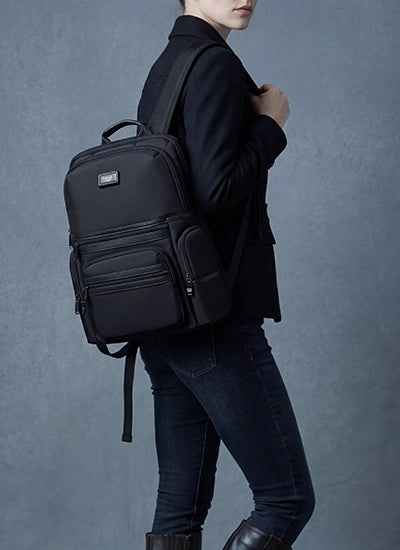

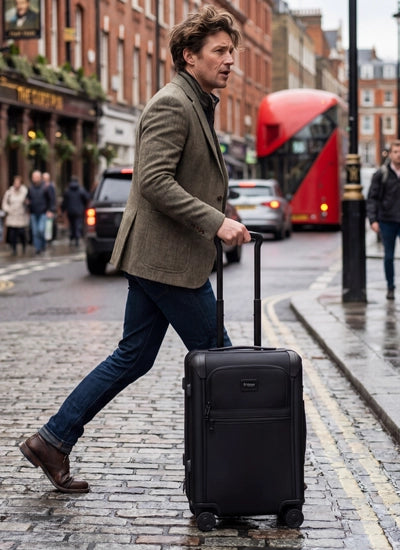
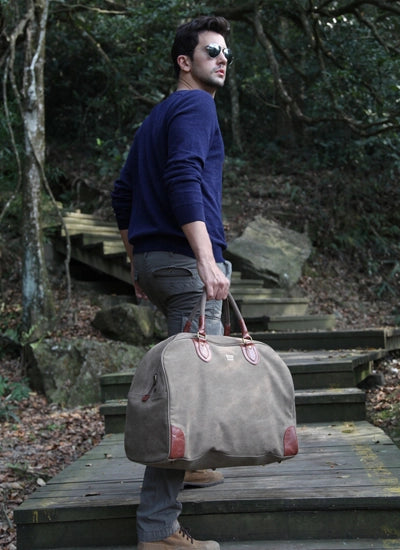
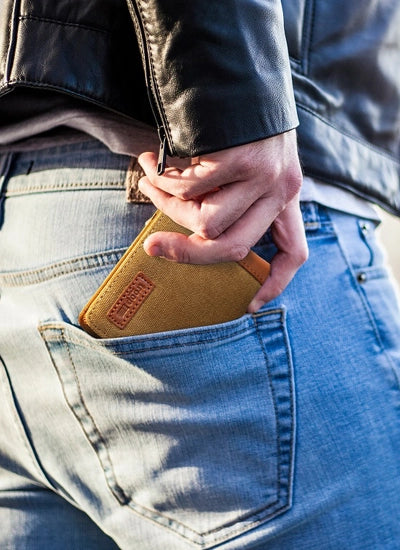

Work bag organisation guide 2026: efficient packing
Rummaging through a chaotic work bag wastes precious minutes every morning and damages your professional image. Studies show that organised bags reduce task-switching latency by 2.1 to 6.8 seconds per item access, which compounds significantly during busy days. Whether you’re a professional navigating hybrid work or a student juggling multiple classes, a well-organised bag enhances efficiency, protects your posture, and projects confidence. This guide provides actionable strategies for selecting durable bags, packing methodically, and maintaining order to transform your daily carry into a streamlined asset.
Table of Contents
- What You Need To Organise Your Work Bag Effectively
- How To Pack And Organise Your Work Bag Step By Step
- Maintenance And Common Mistakes To Avoid
- Expected Results And Verifying Your Organised System
- Find Your Ideal Work Bag At Troop London
- Frequently Asked Questions
Key takeaways
| Point | Details |
|---|---|
| Prioritise accessibility | Place daily essentials like phone, keys, and wallet in quick-access pockets whilst keeping heavy items near your back for posture balance. |
| Maintain weekly routines | Empty and declutter your bag every week to prevent accumulation of unnecessary weight and chaos. |
| Choose flexible systems | Select multi-compartment bags or single-compartment designs with pouches to balance organisation with capacity needs. |
| Use strategic grouping | Group similar items in dedicated pouches or folders to reduce search time and cognitive load. |
| Verify effectiveness | Monitor access speed, bag weight, and stress levels to confirm your organisation system delivers measurable benefits. |
What you need to organise your work bag effectively
Selecting the right bag establishes the foundation for sustainable organisation. Choose bags with durable materials like full-grain leather or high-denier nylon rated 600D or above for abrasion resistance and longevity. Full-grain leather develops a distinguished patina over time whilst maintaining structural integrity, making it ideal for professional environments. High-denier nylon offers lightweight durability with weather resistance, perfect for students and active commuters.
Your bag’s internal architecture dramatically affects daily efficiency. Multi-compartment designs provide predefined organisation with dedicated laptop sleeves, document sections, and quick-access pockets. However, these fixed divisions reduce overall capacity and limit flexibility. Single-compartment bags paired with modular pouches offer superior adaptability, allowing you to reconfigure organisation as needs change. A comparison of bag compartment styles reveals that single-compartment designs with pouches typically provide 15 to 20 percent more usable space.
Essential organisational accessories transform any bag into an efficient system. Small zippered pouches consolidate charging cables, earphones, and personal care items. Accordion folders with tabbed dividers help students manage handouts and assignments by subject. RFID-protected wallets or pockets safeguard contactless cards from electronic pickpocketing in crowded commutes. For professionals seeking polished aesthetics, structured leather messenger laptop bags combine timeless style with practical compartmentalisation.
Pro Tip: Invest in transparent or mesh pouches so you can identify contents instantly without opening every compartment during rushed mornings.
Bag organisation approaches compared:
| Feature | Multi-compartment bags | Single-compartment with pouches |
|---|---|---|
| Organisation structure | Fixed, predefined sections | Flexible, customisable layout |
| Capacity efficiency | Reduced by 15-20% due to dividers | Maximum space utilisation |
| Initial setup | Immediate, intuitive | Requires pouch selection |
| Adaptability | Limited to original design | Easily reconfigured for changing needs |
| Best for | Professionals with consistent carry items | Students and flexible work schedules |
Style considerations matter equally for professional credibility. Structured leather totes and satchels project authority in corporate settings whilst maintaining organisational functionality. Canvas messenger bags offer vintage appeal with modern features like padded laptop compartments. Hybrid workers benefit from convertible designs that transition seamlessly between office formality and casual environments.
How to pack and organise your work bag step by step
Methodical packing creates sustainable organisation that withstands daily use. Follow these sequential steps to build an efficient system:
-
Empty your bag completely. Remove every item, including forgotten receipts, loose coins, and expired items. This reset reveals what you actually carry versus what accumulates unnoticed. Wipe interior surfaces to start fresh.
-
Sort items by usage frequency. Prioritise daily essentials like phone, keys, wallet, and transit passes for quick-access exterior pockets. Place heavier equipment such as laptops and textbooks closest to your back to distribute weight properly and protect your posture during commutes.
-
Group related items in dedicated pouches. Consolidate technology accessories in one pouch, personal care items in another, and stationery in a third. This zoning strategy reduces search time dramatically because you know exactly which pouch contains what you need.
-
Implement subject-based organisation for students. Use accordion folders with tabs ordered by your class schedule. Place morning class materials at the front for immediate access, progressing chronologically through your day. This eliminates frantic searching between lectures.
-
Secure valuables and fragile items properly. Position electronics in padded laptop sleeves or compartments with cushioning. Store contactless cards, passports, and identification in RFID-protected pockets if available. Keep fragile items like glasses in hard cases to prevent damage.
-
Establish daily maintenance and weekly reviews. Restore items to their designated positions each evening. Schedule a comprehensive declutter every Sunday to remove accumulated rubbish and reassess what you genuinely need for the upcoming week.
Quick-access essentials checklist:
- Mobile phone
- Keys and access cards
- Wallet or cardholder
- Transit pass or Oyster card
- Reusable water bottle
- Tissue packet
Pro Tip: Keep a dedicated small pouch for charging cables, adapters, and portable batteries to prevent tangled wires from creating clutter throughout your bag.
Weight distribution significantly impacts comfort during commutes. Position your laptop vertically against the back panel rather than laying it flat at the bottom. This placement keeps the centre of gravity close to your body, reducing shoulder and back strain. Distribute remaining weight evenly across both sides to prevent the bag from pulling to one side.
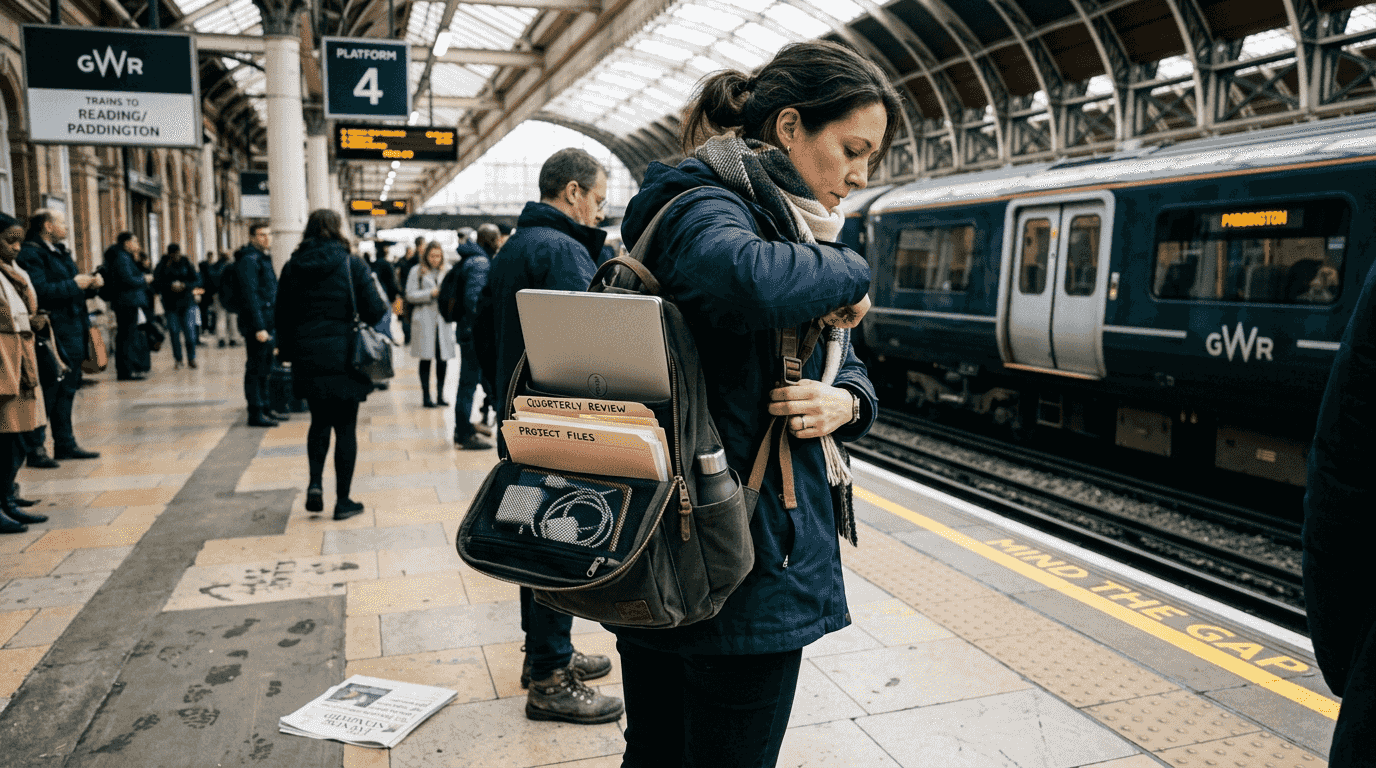
For comprehensive guidance on maintaining organisation beyond initial setup, explore everyday bag organisation tips that address common challenges professionals and students face.
Maintenance and common mistakes to avoid
Sustaining organisation requires deliberate habits that prevent entropy. Declutter weekly by emptying your bag completely and discarding unnecessary items like old receipts, empty snack wrappers, and expired materials. This prevents the gradual accumulation that transforms organised bags into chaotic repositories. Weekly maintenance takes only 10 minutes but saves hours of frustration throughout the following days.
Common mistakes undermine even well-designed systems. Overloading your bag beyond its intended capacity stresses seams, damages zippers, and creates disorganised chaos as items compress together. Ignoring heavy object placement forces your body to compensate with poor posture, leading to chronic back and shoulder pain. Stuffing unrelated items into whatever space is available destroys your organisational zones and eliminates the efficiency benefits.
Research demonstrates that organised bags reduce task-switching latency by 2.1 to 6.8 seconds per item whilst cluttered bags increase error rates by 27 percent after commutes. This cognitive load reduction translates to smoother mornings, fewer forgotten items, and decreased stress levels throughout your day.
Maintaining cognitive ease through consistent organisation becomes automatic with practice. Your brain learns item locations, enabling retrieval without conscious thought. This automaticity frees mental resources for more important decisions rather than wasting energy on basic logistics.
Mistakes that destroy bag organisation:
- Overloading beyond recommended weight capacity
- Placing heavy items in exterior pockets that pull the bag off-balance
- Mixing clean and dirty items without separation
- Ignoring broken zippers or worn straps that need repair
- Skipping weekly decluttering sessions
- Using the bag as temporary storage for unrelated household items
Durability maintenance extends your bag’s functional lifespan significantly. Treat leather bags with appropriate conditioners every three months to prevent cracking. Clean canvas and nylon regularly with mild soap to remove dirt that degrades fibres. Address minor repairs immediately before they escalate into structural failures.
For additional accessories that enhance organisation and durability, review bag accessories for everyday use that complement your primary carry system.
Expected results and verifying your organised system
Properly organised bags deliver measurable improvements across multiple dimensions. Task-switching latency decreases by 2.1 to 6.8 seconds per item access, which compounds dramatically over dozens of daily retrievals. This efficiency gain translates to arriving at meetings prepared, catching transport connections without delays, and starting work immediately rather than searching for materials.
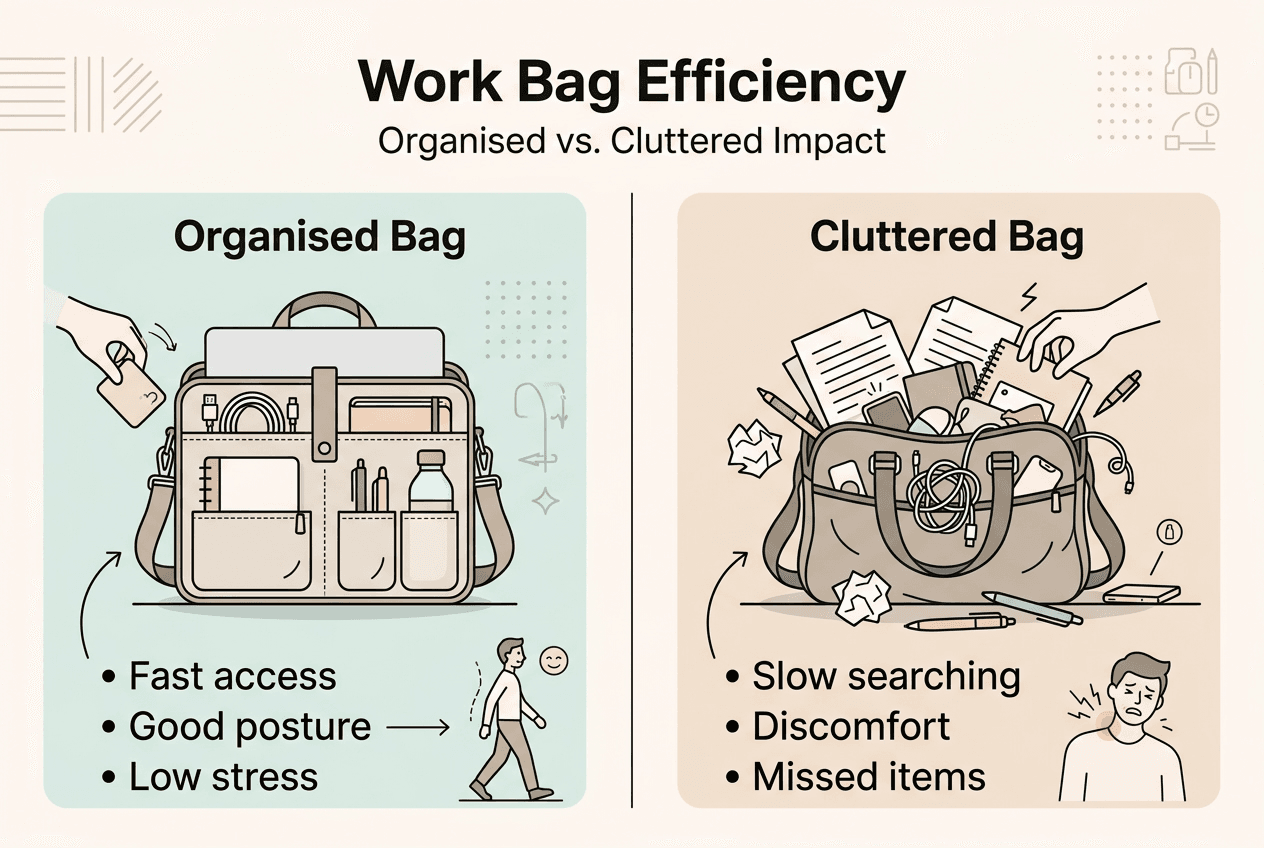
Posture benefits emerge from strategic weight distribution. Positioning heavy items near your back maintains natural spinal alignment during commutes, reducing strain on shoulders and lower back. This proper loading prevents the compensatory lean that develops when bags pull unevenly, protecting long-term musculoskeletal health.
Cognitive load reduction represents perhaps the most valuable benefit. Knowing exactly where items reside eliminates the mental taxation of constant searching. This preserved mental energy improves decision quality throughout your day and reduces the frustration that accumulates from repeated inefficiencies.
Performance comparison: cluttered versus organised bags
| Metric | Cluttered bag | Organised bag | Improvement |
|---|---|---|---|
| Average item access time | 12-18 seconds | 4-6 seconds | 67% faster |
| Post-commute error rate | 27% higher | Baseline | 27% reduction |
| Perceived stress level | Elevated | Normal | Significant decrease |
| Items forgotten weekly | 3-5 items | 0-1 items | 80% reduction |
Indicators your organisation system works effectively:
- You retrieve any item within 5 seconds without looking
- The bag feels noticeably lighter than before reorganisation
- You rarely forget essential items at home
- Morning routines proceed smoothly without bag-related delays
- Colleagues comment on your preparedness and efficiency
- Back and shoulder discomfort during commutes decreases
Verify your system’s effectiveness through simple testing. Time how long retrieving your phone, keys, and wallet takes. If any item requires more than 5 seconds, your zones need refinement. Weigh your bag weekly to ensure it stays within comfortable carrying limits, typically 10 to 15 percent of your body weight for extended periods.
Professional presentation improves noticeably with organised bags. Fumbling through clutter during meetings undermines credibility, whilst confidently producing required materials projects competence. The external perception of your organisational skills influences how colleagues and clients assess your overall professionalism.
For premium bags designed with organisation features that support these benefits, explore luxury leather messenger bags that combine style with functional efficiency.
Find your ideal work bag at Troop London
Transforming your daily carry starts with selecting bags built for lasting organisation and style. Troop London offers expertly crafted canvas and leather bags designed specifically for professionals and students who demand both durability and aesthetic appeal. Each collection balances vintage-inspired design with modern functionality, featuring reinforced construction and thoughtful compartmentalisation.

Explore the curated selection at Troop London to discover messenger bags, backpacks, and totes that elevate your commute whilst maintaining the organisational systems outlined in this guide. The Classic and Heritage collections showcase timeless designs perfect for corporate environments, whilst Urban styles adapt seamlessly to flexible work schedules. Discover proven strategies for maintaining your new bag through everyday bag organisation advice from industry experts.
Pro Tip: Check seasonal collections for limited-edition designs featuring enhanced organisation features like modular pouches and expandable compartments suited for hybrid workstyles.
Frequently asked questions
What are the best materials for a durable work bag?
Full-grain leather and high-denier nylon rated 600D or above offer exceptional durability and professional aesthetics. Look for reinforced stitching at stress points, padded laptop sleeves with cushioning, and RFID-protected pockets for security. Quality materials resist daily wear whilst developing character over years of use.
How often should I declutter my work bag?
Weekly decluttering prevents chaos by removing accumulated receipts, empty containers, and unnecessary items before they create disorganisation. Empty your bag completely each Sunday, assess what you genuinely need for the upcoming week, and discard everything else. This 10-minute habit maintains the efficiency of your organisational system.
What is the best way to organise documents for students?
Accordion folders with subject-labelled tabs ordered by your class schedule provide optimal document management. Place morning class materials at the front, progressing chronologically through your day. This method eliminates frantic searching between lectures and protects important handouts from damage.
How should I distribute weight in my work bag?
Position heavy items like laptops and textbooks vertically against the back panel closest to your body. This placement maintains proper centre of gravity, reducing shoulder and back strain during commutes. Distribute remaining weight evenly across both sides to prevent the bag from pulling unevenly and forcing postural compensation.
Can pouches really improve bag organisation?
Absolutely. Pouches create defined zones that group related items together, dramatically reducing search time. Technology accessories stay in one pouch, personal care in another, and stationery in a third. This zoning enables you to locate any item within seconds because you know exactly which pouch contains what you need without searching the entire bag.


