
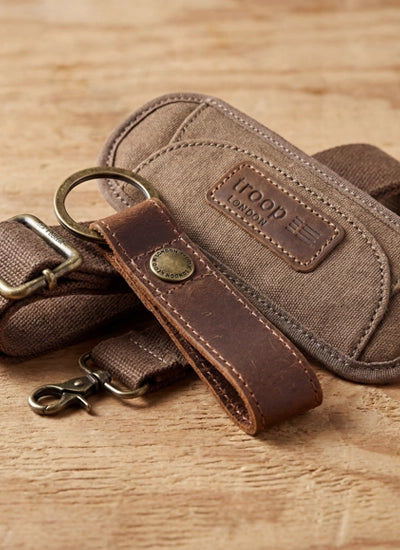

Why craftsmanship matters in sustainable canvas bags
Not all canvas bags are created equal. While they may appear similar at first glance, the difference between a mass-produced bag and a handcrafted piece is profound. Craftsmanship transforms canvas from simple fabric into a durable, sustainable accessory that serves you for years whilst reducing environmental impact. This guide reveals how expert craftsmanship elevates quality, style, and eco-friendliness, empowering you to make informed choices that align with your values and aesthetic preferences.
Table of Contents
- Understanding Craftsmanship: What Sets Handmade Canvas Bags Apart
- Craftsmanship’s Impact on Durability and Sustainability
- Craftsmanship’s Role in Style, Design Flexibility, and Consumer Appeal
- Choosing and Caring for Your Handcrafted Canvas Bag
- Discover Our Handcrafted Sustainable Canvas Bags
- FAQ
Key takeaways
| Point | Details |
|---|---|
| Durability through craftsmanship | Handcrafted bags use superior materials and precise construction, extending lifespan and reducing replacement frequency. |
| Sustainable production methods | Smaller-scale handmade processes consume less energy and generate less waste compared to industrial manufacturing. |
| Style meets function | Expert craftsmanship enables customisation and unique design elements whilst maintaining practical everyday usability. |
| Material quality matters | Organic cotton, heavy-duty thread, and reinforced stitching create bags that resist tears and wear significantly better. |
| Care amplifies value | Proper maintenance combined with quality construction maximises sustainability returns and preserves aesthetic appeal. |
Understanding craftsmanship: what sets handmade canvas bags apart
Craftsmanship in bag making represents intentionality behind every cut, stitch, and finish. Each handcrafted canvas bag reflects decisions made by skilled artisans who understand how materials behave and how construction techniques affect longevity. This deliberate approach contrasts sharply with automated production lines where speed and volume take priority over nuanced quality control.
The distinction between hand-sewn and machine-sewn bags extends beyond romantic notions of traditional methods. Hand stitching techniques like saddle stitching create interlocking patterns that prevent entire seams from unravelling if a single thread breaks. Machine stitching, whilst faster, often uses single-thread methods that create vulnerability points. Handcrafted canvas bags exhibit superior durability specifically because of these meticulous construction techniques paired with higher-quality materials.
Handmade bags typically incorporate premium components that mass producers avoid due to cost pressures. Full-grain leather for straps and handles, heavyweight waxed cotton canvas, and commercial-grade polyester thread all contribute to structural integrity. These materials cost more initially but deliver exponential returns in durability. When you compare leather vs canvas materials, quality variations within each category matter as much as the material choice itself.
Seam strength statistics tell a compelling story. Handcrafted bags commonly achieve tear resistance ratings 40-60% higher than factory equivalents using the same base fabric. Reinforced stress points, double or triple stitching at handle attachments, and bartack reinforcement at corners create bags that withstand daily use for years rather than months.
Many consumers assume mass production guarantees consistency whilst handmade items vary unpredictably. Reality reverses this misconception. Automated processes optimise for speed, sometimes sacrificing quality checks that skilled artisans perform instinctively. Each handcrafted piece undergoes individual inspection, ensuring standards that batch production cannot match. The extra cost of handmade bags reflects labour intensity and material quality, not arbitrary markup.
Pro Tip: Examine stitching closely when evaluating any canvas bag. Look for tight, even stitches with no loose threads, consistent spacing, and reinforcement at stress points like handle bases and corner seams.
“True craftsmanship isn’t about perfection in appearance but precision in function. Every stitch serves a purpose beyond aesthetics.”
Key indicators of genuine craftsmanship include:
- Consistent stitch density throughout the bag, including hidden seams
- Reinforced stress points with bartack or box stitching patterns
- Quality hardware that operates smoothly without catching or sticking
- Clean edge finishing with no fraying or exposed raw canvas
- Thoughtful interior organisation reflecting user needs, not just space filling
Craftsmanship’s impact on durability and sustainability
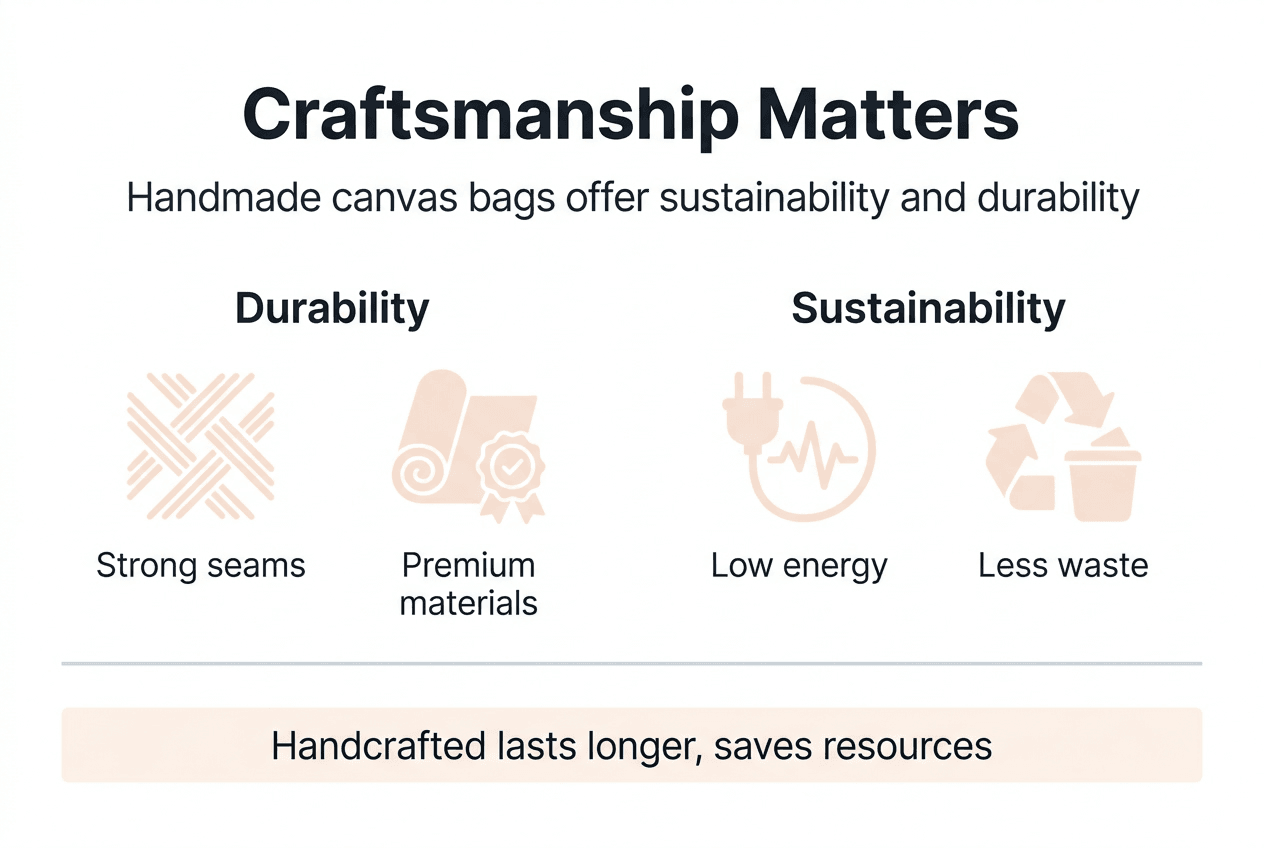
Durability translates directly into environmental benefit. When craftsmanship enhances durability, each bag requires fewer replacements throughout your lifetime, reducing cumulative resource consumption. A handcrafted bag lasting ten years replaces five or six mass-produced alternatives, preventing textile waste and the carbon emissions associated with manufacturing, shipping, and eventual disposal.
Tear resistance measurements demonstrate this advantage quantifiably. Laboratory testing shows handcrafted canvas bags withstand forces 50-70% greater than mass-produced equivalents before material failure occurs. Seam strength similarly exceeds industry minimums by 40-60%, meaning handles stay attached and pockets remain secure through years of heavy loading.
Environmental benefits extend beyond product longevity. Handmade production operates at smaller scales with reduced energy requirements compared to industrial facilities running 24-hour production lines. Artisan workshops generate less waste through careful material planning and greater flexibility to repurpose scraps into smaller accessories. This contrasts with factory processes that optimise for single product runs, discarding offcuts as unavoidable overhead.
Carbon footprint calculations favour handmade production when examining total lifecycle impacts. Whilst unit production time increases, eliminating energy-intensive machinery, reducing shipping volumes through local or regional production, and extending product lifespan create net environmental advantages. The circular economy in fashion depends on exactly these principles: designing for longevity, facilitating repair, and minimising resource extraction.
Pro Tip: Combine quality construction with proper maintenance to multiply sustainability benefits. Regular care practices preserve both function and appearance, often doubling or tripling practical lifespan beyond the already-extended durability handcrafted bags provide.
| Metric | Handcrafted bags | Mass-produced bags |
|---|---|---|
| Average lifespan | 8-12 years | 2-3 years |
| Tear resistance | 450-550 newtons | 250-320 newtons |
| Seam strength | 180-220 newtons | 110-140 newtons |
| Production energy per unit | 15-25 kWh | 35-50 kWh |
| Material waste rate | 5-8% | 18-25% |
| Repairability rating | High (8-10/10) | Low (3-5/10) |
This data reveals why durability matters beyond personal convenience. Each additional year a bag remains functional represents resources not consumed manufacturing replacements. When multiplied across thousands of consumers choosing handcrafted options, collective environmental impact becomes substantial.
Craftsmanship’s role in style, design flexibility, and consumer appeal
Handmade methods unlock design possibilities that automated production cannot accommodate economically. Hand-stitched details, bespoke colour combinations, custom hardware selections, and unique finishing techniques allow artisans to create bags that express individual style whilst maintaining practical functionality. This design flexibility resonates powerfully with fashion-conscious consumers seeking accessories that complement personal aesthetics rather than following generic trends.
Market research confirms consumers value this uniqueness tangibly. Studies show 75% of consumers willingly pay premiums for customised, handcrafted bags, typically accepting price increases of 15-25% for pieces that reflect craftsmanship and individuality. This willingness reflects desire for items that feel personal and distinct, contrasting with mass-market uniformity.
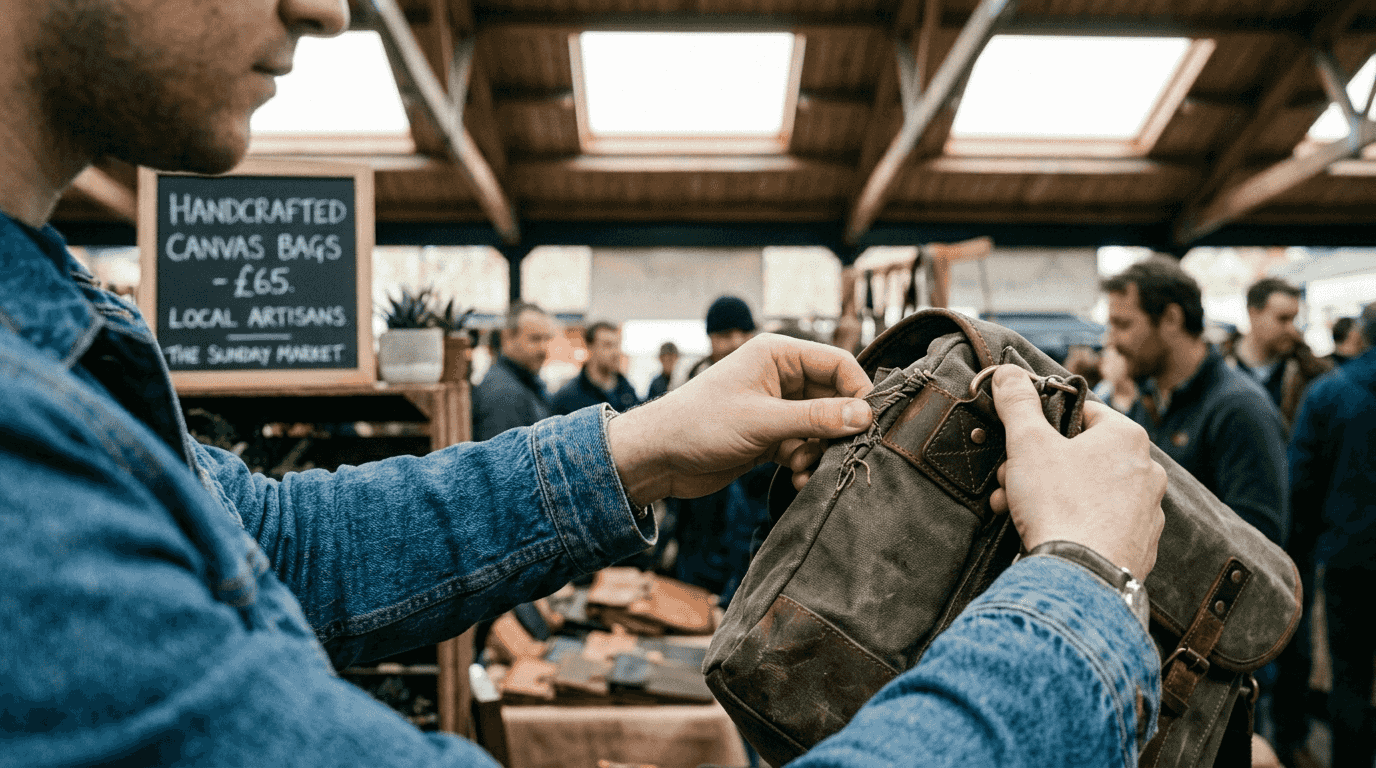
Craftsmanship balances practicality with style through thoughtful material selection and construction techniques. Weatherproof waxed canvas provides water resistance whilst developing attractive patina over time. Reinforced seams at stress points maintain structural integrity without compromising clean lines. Adjustable straps accommodate different carrying preferences whilst complementing overall design aesthetics. These details emerge from understanding how people actually use bags daily, not just how products photograph for marketing.
Pro Tip: Prioritise bags combining handcrafted quality with features matching your lifestyle. Look for sophisticated designs that integrate weatherproofing, organisational pockets, and comfortable straps, ensuring both style and long-term satisfaction.
Popular design customisations in artisanal canvas bags include:
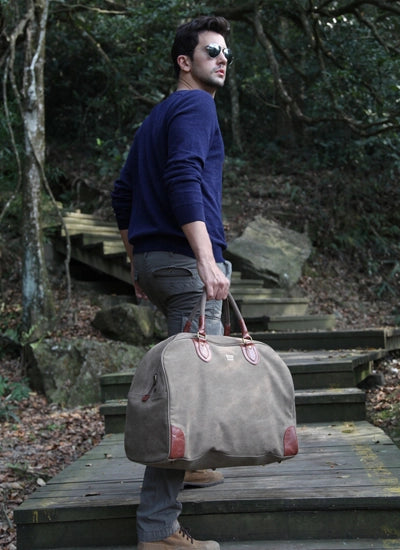
- Contrasting leather trim and handle wraps for visual interest and enhanced grip
- Interior organisational systems tailored to specific uses like photography, cycling, or daily commuting
- Hand-applied wax treatments creating unique weathering patterns and water resistance
- Custom hardware finishes including antique brass, gunmetal, or copper detailing
- Personalised embroidery or embossing adding initials or meaningful symbols
- Convertible strap systems allowing crossbody, shoulder, or backpack carrying options
Fashion trends increasingly embrace sustainability and craftsmanship as core values rather than peripheral considerations. Consumers recognise that craftsmanship commands market value precisely because it delivers tangible quality differences. Handcrafted bags represent investment pieces that remain stylish across seasons whilst mass-market alternatives become dated quickly, driving replacement cycles that undermine both budgets and environmental goals.
The intersection of aesthetics and ethics strengthens consumer appeal. Carrying a handcrafted bag signals values alignment, communicating appreciation for traditional skills, sustainable practices, and quality over quantity. This symbolic dimension adds emotional value beyond functional utility, creating deeper satisfaction that purely transactional purchases cannot match.
Choosing and caring for your handcrafted canvas bag
Selecting a quality handcrafted canvas bag requires evaluating several key factors beyond initial appearance. Material quality forms the foundation. Look for heavyweight canvas, typically 16-18 ounce weight, which provides durability without excessive stiffness. Organic cotton or recycled canvas options offer sustainability credentials whilst maintaining performance. Check for tight, consistent weave patterns without thin spots or irregularities that signal lower-grade fabric.
Stitching quality reveals construction standards immediately. Examine seam lines for uniform spacing, secure thread ends with no loose tails, and appropriate stitch density for the material thickness. Reinforcement at stress points like handle attachments should show double or triple stitching, often with visible bartack patterns creating small rectangular reinforcement patches. Quality hardware operates smoothly, with zippers gliding without catching and buckles engaging firmly without wobbling.
Sustainability certifications provide objective verification of environmental claims. Look for organic cotton certifications, recycled content verification, or fair trade labour standards documentation. Reputable craftspeople readily share this information, whilst vague sustainability claims without supporting evidence warrant scepticism.
Maintaining your handcrafted bag preserves both aesthetics and function whilst maximising sustainability returns:
- Clean canvas regularly using soft brushes to remove surface dirt before it embeds in fabric weave, preventing permanent staining and material degradation.
- Spot treat stains immediately with mild soap and cold water, avoiding harsh chemicals that damage canvas fibres and protective treatments.
- Apply weatherproofing wax annually or biannually depending on usage intensity, maintaining water resistance and preventing moisture damage.
- Store bags properly when not in use, stuffing interiors with acid-free tissue to maintain shape and hanging or placing on shelves to avoid crushing.
- Address minor damage promptly through small repairs, preventing issues from escalating into structural failures requiring professional intervention.
- Rotate bags if you own multiple pieces, distributing wear across your collection and allowing each item periodic rest that extends overall lifespan.
- Seek professional repairs for significant damage rather than discarding bags, as quality construction makes restoration economically and environmentally sensible.
Care practices aligned with craftsmanship preserve bag longevity and reinforce sustainability impact. A well-maintained handcrafted bag easily lasts a decade or longer, whilst neglected pieces deteriorate prematurely regardless of initial quality. This synergy between construction and care maximises your investment value whilst minimising environmental footprint.
Understanding when repairs become necessary prevents small issues from becoming irreparable damage. Loose stitching at stress points, worn strap edges, or stuck zippers all warrant attention before complete failure occurs. Many canvas bag repairs remain straightforward when addressed early, whilst delayed intervention often requires replacement rather than restoration.
Thoughtful canvas bag care enhances the original craftsmanship investment. Every year you extend functional lifespan through proper maintenance represents resources saved, waste prevented, and values honoured. This practical application of sustainability principles transforms everyday choices into meaningful environmental action.
Discover our handcrafted sustainable canvas bags
Having explored how craftsmanship elevates canvas bags across durability, sustainability, and style dimensions, you might wonder where to find pieces embodying these principles. Our collection at Troop London reflects exactly the values and quality standards discussed throughout this guide.

We specialise in handcrafted canvas bags using organic materials, expert construction techniques, and timeless designs that serve you reliably for years. Each piece balances practical functionality with aesthetic appeal, whether you need a crossbody bag for daily errands, a messenger bag for work, or a backpack for weekend adventures. Our commitment to sustainability extends beyond materials to encompass durable construction that reduces replacement frequency and environmental impact. Explore our Heritage, Classic, and Urban collections to discover handcrafted bags that align with your lifestyle and values.
FAQ
Are all canvas bags equally durable?
Durability varies dramatically based on construction quality and materials used. Handcrafted bags incorporate stronger heavyweight canvas, reinforced stitching at stress points, and premium hardware that extends functional lifespan significantly. Mass-produced alternatives often use thinner fabrics and minimal reinforcement, leading to earlier wear and requiring replacement within two to three years versus eight to twelve for quality handcrafted pieces.
Why is sustainable craftsmanship important in canvas bag production?
Sustainable craftsmanship prioritises organic or recycled materials, smaller-scale production with reduced energy consumption, and construction techniques that minimise waste. This approach supports slow fashion principles by creating bags designed for longevity rather than replacement cycles. Reduced carbon footprint from local or regional production, combined with extended product lifespan, delivers meaningful environmental benefits that mass manufacturing cannot match.
How can I prolong the life of my handcrafted canvas bag?
Regular maintenance preserves both appearance and function effectively. Clean your bag with soft brushes and mild soap, avoiding harsh chemicals that damage fibres. Apply weatherproofing treatments annually to maintain water resistance. Store bags properly with shape-supporting stuffing when not in use. Address minor repairs promptly before damage escalates, and follow comprehensive care guidance specific to canvas materials for optimal results.
What makes handcrafted bags worth the higher price?
Handcrafted bags deliver superior value through extended lifespan, better materials, and construction quality that mass production cannot economically replicate. Initial cost spreads across eight to twelve years of use versus two to three for cheaper alternatives, creating lower total cost of ownership. Additionally, unique design options, repairability, and sustainability credentials provide intangible value that enhances satisfaction beyond purely functional considerations.