
Why Choose Canvas Bags: Style, Sustainability, Strength
Over half of British shoppers now consider sustainability when choosing fashion accessories. For those who care deeply about the environment, finding a canvas bag that matches both eco values and modern style has become increasingly important. Whether it is the craftsmanship, durability, or the story behind each piece, this guide will help eco-conscious British fashion lovers discover canvas bags that marry ethical origins with everyday practicality.
Table of Contents
- Canvas Bags Explained: Materials And Origins
- Different Types Of Canvas Bags Available
- Key Benefits: Durability, Style, Use Cases
- Environmental Impact And Ethical Production
- Comparing Canvas Bags To Alternative Options
Key Takeaways
| Point | Details |
|---|---|
| Durability and Versatility | Canvas bags offer exceptional wear resistance and are suitable for a variety of uses, making them a reliable accessory for everyday activities. |
| Sustainability Focus | Selecting canvas bags contributes to reducing single-use plastic consumption and supports eco-friendly practices through reusable and biodegradable materials. |
| Diverse Styles | The range of canvas bag designs caters to different lifestyle needs, from practical totes to fashionable shoulder bags, enhancing both functionality and style. |
| Informed Purchasing | When selecting a canvas bag, consider the fabric weight, weave density, and manufacturing ethics to ensure long-lasting performance and environmental responsibility. |
Canvas Bags Explained: Materials And Origins
Canvas bags represent a fascinating intersection of textile engineering and sustainable design, with origins tracing back centuries of practical craftsmanship. Traditional canvas materials have historically emerged from cotton-based fabrics, offering remarkable strength and exceptional flexibility that make them ideal for numerous applications.
The fundamental composition of canvas typically involves tightly woven natural fibres, predominantly cotton, which creates an extraordinarily robust fabric capable of withstanding significant wear and environmental challenges. These woven textiles originally developed through maritime and industrial uses, where durability was paramount - sailors, merchants, and tradespeople required materials that could endure harsh conditions while maintaining structural integrity.

Modern canvas production has evolved significantly, incorporating sustainable practices and innovative weaving techniques. Contemporary manufacturers now produce canvas using organic cotton, recycled materials, and environmentally responsible processes. This evolution reflects growing consumer demand for accessories that balance aesthetic appeal with ecological consciousness. By choosing canvas bags, environmentally aware individuals can make a tangible contribution to reducing synthetic material consumption.
Pro tip: Research Canvas Composition: When purchasing a canvas bag, always examine the fabric weight and weave density. Higher thread count and heavier fabric weights typically indicate superior durability and longer-lasting performance.
Different Types Of Canvas Bags Available
Versatile canvas bag designs range from practical everyday totes to sophisticated fashion statements, reflecting the material’s incredible adaptability. Canvas bags have evolved far beyond simple utility, becoming a stylish accessory that meets diverse lifestyle needs across multiple contexts.
Traditional canvas bag categories typically include:
- Tote Bags: Large, open-topped carriers perfect for shopping, beach visits, or everyday errands
- Messenger Bags: Designed with a cross-body strap, ideal for professionals and students
- Backpacks: Practical for travel, commuting, and outdoor adventures
- Shoulder Bags: Compact options for daily essentials with a more refined aesthetic
- Weekend Bags: Larger capacity bags suitable for short trips and overnight stays
Modern canvas bag manufacturers have significantly expanded design possibilities, incorporating innovative features like multiple compartments, waterproof linings, and ergonomic straps. Canvas bag functionality now extends beyond traditional uses, embracing contemporary aesthetic and practical requirements while maintaining the material’s core characteristics of durability and strength.
Pro tip: Bag Style Selection: Consider your primary usage and personal style when choosing a canvas bag. Match the bag’s size, strap length, and design to your specific lifestyle needs for maximum versatility and comfort.
Here is a concise comparison of common canvas bag styles and their ideal uses:
| Canvas Bag Style | Typical Capacity | Main Use Case |
|---|---|---|
| Tote Bag | 15–25 litres | Shopping, daily errands |
| Messenger Bag | 10–18 litres | Work, students |
| Backpack | 20–40 litres | Travel, commuting |
| Shoulder Bag | 6–12 litres | Essentials for outings |
| Weekend Bag | 30–45 litres | Overnight trips |
Key Benefits: Durability, Style, Use Cases
Canvas bag versatility represents a remarkable fusion of practical functionality and aesthetic appeal, offering consumers a robust accessory that transcends traditional material limitations. These bags have emerged as a sophisticated solution for individuals seeking both reliability and style in their everyday carry items.
The primary benefits of canvas bags can be categorised into three critical dimensions:
- Durability: Exceptional resistance to wear and tear
- Sustainability: Environmentally friendly material options
- Versatility: Adaptable designs for multiple lifestyle requirements
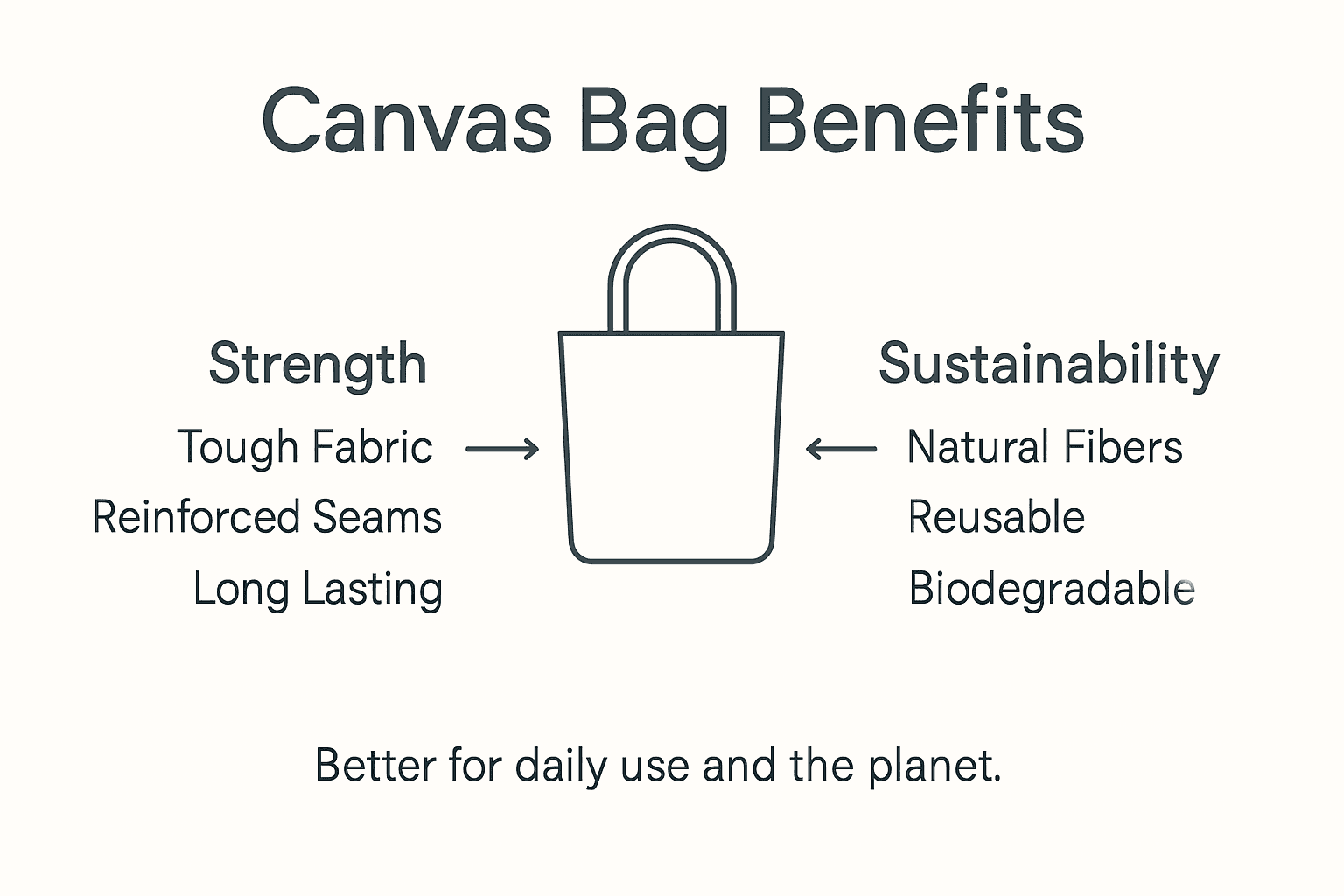
Canvas bag engineering demonstrates remarkable load-bearing capabilities, with materials capable of withstanding significant weight while maintaining structural integrity. The inherent strength of tightly woven canvas fibres enables these bags to endure rigorous daily use across professional, academic, and recreational contexts. Modern manufacturing techniques have further enhanced these natural properties, incorporating reinforced stitching, water-resistant treatments, and ergonomic design elements that extend the bag’s functional lifespan.
Pro tip: Material Performance Assessment: Always inspect the canvas bag’s thread count and weave density before purchasing, as these factors directly correlate with the bag’s long-term durability and performance potential.
Environmental Impact And Ethical Production
Sustainable consumer movements have dramatically transformed perspectives on environmental responsibility, with canvas bags emerging as a powerful symbol of ecological consciousness. These bags represent more than just a fashion accessory - they embody a meaningful commitment to reducing single-use plastic waste and minimising environmental degradation.
Key environmental advantages of canvas bags include:
- Reusability: Capable of hundreds of uses compared to disposable alternatives
- Biodegradability: Often made from natural materials that decompose more efficiently
- Reduced Carbon Footprint: Manufacturing process typically generates less environmental impact than plastic bag production
- Recyclability: Many canvas bags can be repurposed or recycled at end of life
Plastic pollution research highlights the critical importance of transitioning to sustainable alternatives. Ethical production in canvas bag manufacturing increasingly involves transparent supply chains, fair labour practices, and utilisation of organic or recycled materials. Manufacturers are now prioritising environmentally responsible techniques, ensuring that each bag represents not just a practical accessory, but a statement of environmental stewardship.
Pro tip: Sustainable Shopping Strategy: When purchasing canvas bags, prioritise brands that provide clear information about their manufacturing processes, material sourcing, and environmental certifications.
The following table highlights key sustainability measures in ethical canvas bag production:
| Sustainability Measure | Environmental Benefit | Consumer Impact |
|---|---|---|
| Organic fibres | Reduced pesticide use | Healthier product option |
| Recycled materials | Less landfill waste | Supports circular economy |
| Transparent sourcing | Accountability in production | Informed purchasing choices |
| Fair labour practices | Social responsibility | Ethically conscious shopping |
Comparing Canvas Bags To Alternative Options
Bag material characteristics reveal significant differences between canvas and alternative options, highlighting why discerning consumers increasingly prefer canvas as their primary accessory material. Each material brings unique properties that cater to different lifestyle requirements and environmental considerations.
Comparative analysis of bag materials demonstrates key distinctions:
-
Canvas: - Eco-friendly and biodegradable
- Highly durable with natural strength
- Versatile aesthetic appeal
-
Leather: - Premium appearance
- Higher cost
- Less environmentally sustainable
-
Synthetic Materials: - Lightweight
- Water-resistant
- Lower environmental credentials
Plastic bag research underscores the substantial environmental challenges posed by synthetic alternatives. Canvas bags represent a significantly more sustainable choice, offering durability without compromising ecological responsibility. The material’s natural fibres provide exceptional load-bearing capacity while maintaining a lower carbon footprint compared to petroleum-based synthetic materials.
Pro tip: Material Comparison Strategy: Always evaluate bag materials not just by immediate performance, but by their long-term environmental impact and lifecycle sustainability.
Discover Durable Style With Troop London Canvas Bags
If you value the strength, sustainability, and timeless appeal of canvas highlighted in “Why Choose Canvas Bags: Style, Sustainability, Strength” then Troop London offers an exceptional range designed just for you. Canvas bags solve the challenge of needing a reliable, eco-friendly bag that fits your lifestyle without sacrificing fashion or durability. With natural fibres and robust construction, these bags meet the demand for long-lasting accessories that support ethical consumer choices.

Explore the collections at Troop London, where craftsmanship meets practical design. Whether you seek a classic backpack, messenger bag or a stylish crossbody option, our products are made from organic and sustainable materials that reflect the values discussed in the article. Take advantage of our quality guarantees and customer reviews today and make a confident choice that blends function, style, and responsibility. Visit https://trooplondon.com now to find your perfect canvas companion.
Frequently Asked Questions
What makes canvas bags a sustainable choice?
Canvas bags are often made from natural materials like organic cotton, which reduces reliance on synthetic materials and their negative environmental impact. They are reusable, biodegradable, and typically have a lower carbon footprint compared to plastic bags.
How durable are canvas bags compared to other materials?
Canvas bags are highly durable due to their tightly woven natural fibres, making them resistant to wear and tear. They can withstand significant weight and are engineered with reinforced stitching and water-resistant treatments, extending their lifespan.
What types of canvas bags are available and their primary uses?
Canvas bags come in various styles, including tote bags for shopping, messenger bags for work or school, backpacks for travel, and weekend bags for short trips. Each type is designed to cater to different lifestyle requirements, ensuring versatility.
How do I assess the quality of a canvas bag before purchasing?
When evaluating a canvas bag, check the fabric weight and weave density. A higher thread count and thicker fabric typically indicate superior durability and strength, ensuring the bag will last through regular use.