


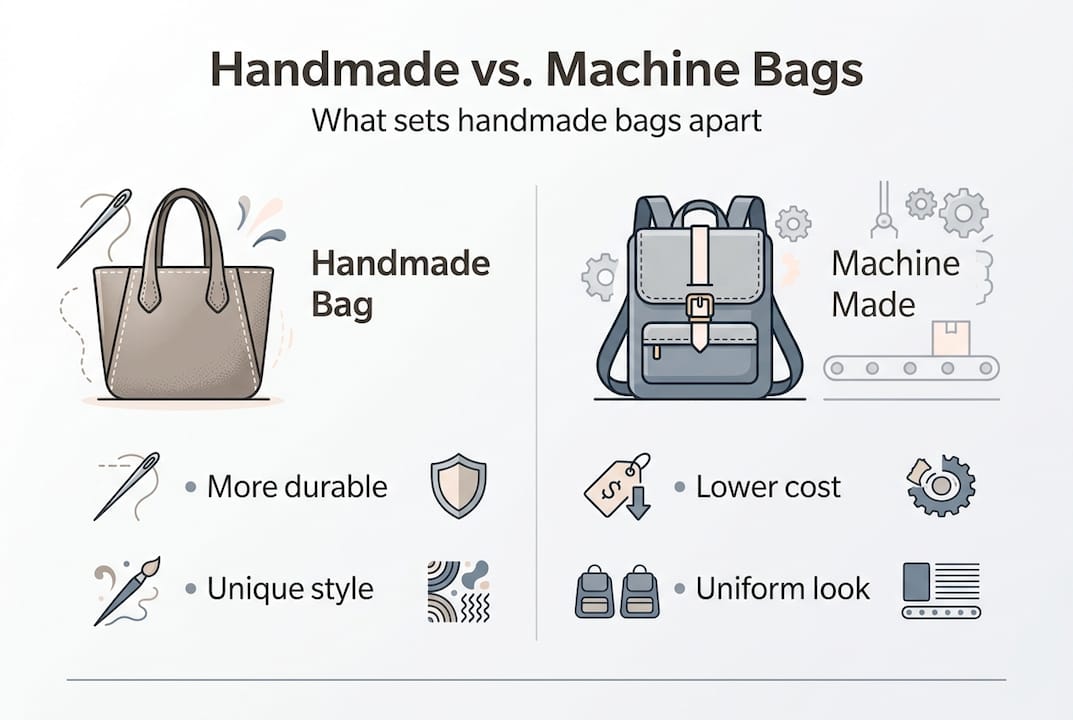
What sets handmade bags apart: durability, style, meaning
Most people assume a bag is a bag. You carry it, it wears out, you replace it. But 85% of handmade leather goods last over seven years, compared to just 30% of mass-produced alternatives. That single figure reframes everything. A handmade bag is not simply a purchase; it is a long-term companion that carries your story, your values, and your sense of style. If you have ever stood in a shop wondering whether the extra investment is genuinely worth it, this guide will give you the honest, detailed answer you deserve.
Table of Contents
- The artisan difference: craftsmanship and process
- Quality that lasts: durability and cost-per-use explained
- Perfect imperfections: authenticity and certifications
- When machine-made might suit you
- Choosing well: timelessness, personal expression, and shopping tips
- Find your perfect handmade bag with Troop London
- Frequently asked questions
Key Takeaways
| Point | Details |
|---|---|
| Handmade means craftsmanship | True handmade bags reflect the skill and care of experienced artisans in every detail. |
| Superior durability and value | Handmade bags last longer and offer a better cost-per-use than mass-produced alternatives. |
| Authenticity through imperfection | Subtle flaws and natural marks prove authenticity and add unique character to every piece. |
| Balanced decision-making | There are occasions where machine-made might suit practical needs or budgets. |
| Empowered, sustainable choices | Knowing what sets handmade apart helps you choose accessories that reflect both your style and values. |
The artisan difference: craftsmanship and process
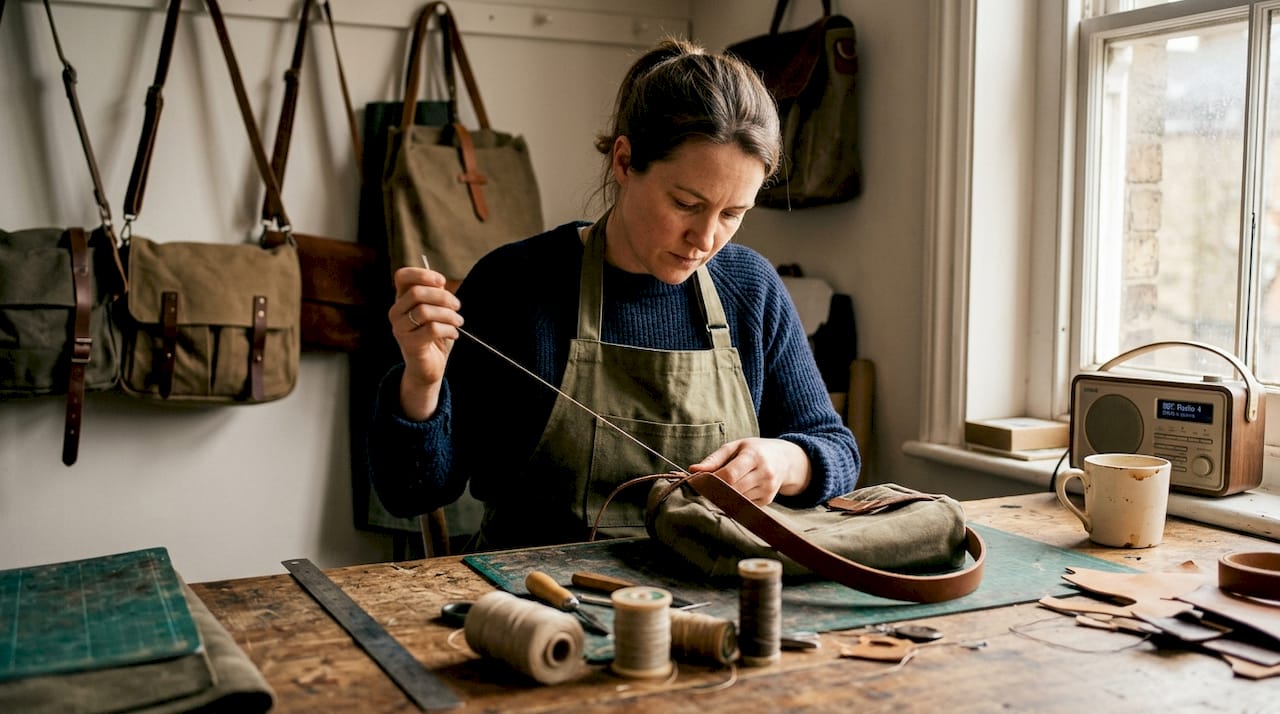
When a skilled artisan makes a bag by hand, every stage of production receives focused attention that a factory line simply cannot replicate. The stitching is placed deliberately. The edges are cut and finished with care. The hardware is chosen to complement the material rather than just to reduce cost. This is not nostalgia; it is a fundamentally different way of making things.
Small-batch, detail-focused production by skilled artisans supports ethical labour and generates far less waste than high-volume factory methods. When you choose a handmade bag, you are also choosing to support a person, not just a process. That matters, especially for those of us who think carefully about where our money goes.
The key qualities that define genuine artisan production include:
- Hand-stitching that holds under pressure and can be repaired rather than replaced
- Leatherwork or canvas finishing done by eye, not by machine calibration
- Attentive hardware fitting that ensures zips, buckles, and clasps align properly
- Small-batch runs that allow quality checks at every stage
- Minimal offcuts and waste because materials are treated as precious, not disposable
This approach to style and sustainability is what separates a bag you treasure from one you tolerate. Understanding craftsmanship in canvas bags helps you see why the process itself is part of the product’s value. The ethics behind artisan production and sustainability are not marketing language; they are built into every seam.
Pro Tip: When examining a handmade bag, turn it inside out if possible. Neat, consistent interior stitching is one of the clearest signs of genuine artisan care.
Quality that lasts: durability and cost-per-use explained
Let us talk numbers, because the financial case for handmade bags is stronger than most people realise. The role of durability in everyday bags is not just about avoiding wear and tear; it is about understanding true value over time.
Consider a handmade bag priced at £320. Used daily over eight years, that works out to roughly £0.11 per day. A cheaper machine-made bag at £80 that lasts two years costs £0.11 per day as well, but requires four replacements over the same period, totalling £320 anyway, with four times the environmental impact. The maths are clear. Why invest in quality bags becomes an obvious question once you frame it this way.
| Feature | Handmade bag | Machine-made bag |
|---|---|---|
| Average lifespan | 7 to 10+ years | 1 to 3 years |
| Cost-per-use | Very low over time | Higher due to replacement |
| Maintenance | Repairable, ages well | Often non-repairable |
| Emotional value | High, personal, unique | Low, interchangeable |
| Environmental impact | Minimal, small-batch | Higher, mass production |
The handmade durability advantage is not accidental. It comes directly from the care taken at every production stage. Reinforced seams, quality thread, and properly finished edges all contribute to a bag that genuinely improves with age rather than deteriorating.
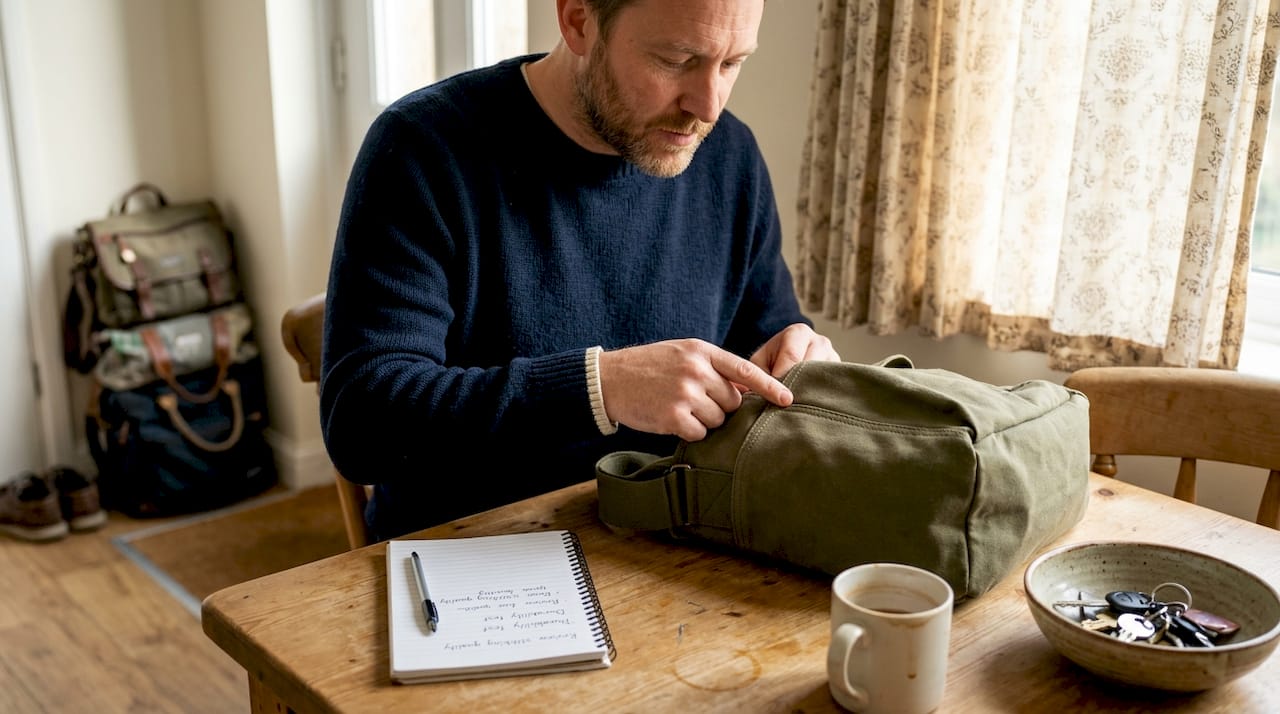
Pro Tip: Run your finger along the seams of any bag before buying. Tight, even stitching with no loose threads is a reliable durability marker. Reinforced corners are equally telling.
Perfect imperfections: authenticity and certifications
Here is something that surprises many buyers: a truly handmade bag will never be perfectly uniform. And that is precisely the point. Authentic handmade goods carry what experts call “perfect imperfections”: slight variations in stitching spacing, natural marks in the material, and subtle asymmetries that prove a human being made this, not a machine.
The term “handmade” is, frustratingly, unregulated in most markets. Anyone can print it on a label. So knowing what to look for matters enormously.
Genuine signs of handcrafted authenticity include:
- Visible hand-stitching with slight, natural variation in spacing
- Hand-cut edges that show minor irregularities rather than laser-perfect lines
- Artisan marks or signatures inside the bag or on the lining
- Natural material characteristics such as grain variation in leather or canvas texture differences
- Certifications like the Italian Fatto a Mano standard, which requires at least 70% of production to be completed by hand
“True handmade quality cannot be faked at scale. The marks of a human hand are not flaws; they are the signature of someone who cared enough to make something properly.”
When assessing leather bag quality, these details are your most reliable guide. For those interested in UK sustainable leather bags, understanding certification standards helps you shop with genuine confidence rather than relying on marketing claims alone.
When machine-made might suit you
Balance matters. Not every situation calls for a handmade bag, and pretending otherwise would be doing you a disservice. There are genuine scenarios where machine-made bags make more sense, and recognising them is part of shopping intelligently.
Machine-made bags offer consistency, affordability, and often enhanced technical features such as water resistance, reinforced bases, and modular organisation systems. If you rotate your accessories frequently with the seasons, investing heavily in a single handmade piece may not align with your lifestyle.
Situations where machine-made bags can genuinely serve you well:
- Frequent style rotation: If you change bags weekly to match outfits, lower-cost options make practical sense
- Heavy daily stress: Some machine-made bags from reputable manufacturers include reinforcements specifically designed for commuter or gym use
- Budget constraints: A well-made machine bag from a quality brand still outperforms a poorly made handmade one
- Trend-led fashion: Fast-moving trends may not justify the investment in a timeless handmade piece
“The emotional and sustainable appeal of handmade is real, but it is not the right fit for every buyer or every occasion. Knowing your own habits is the first step to choosing well.”
For those exploring crossbody bag options across different production styles, the key is matching the bag to your actual life, not an idealised version of it. Machine-made bags excel for high-fashion rotation or heavy daily stress with reinforcements, but they rarely offer the personal expression or sustainable credentials that a handmade piece provides.
Choosing well: timelessness, personal expression, and shopping tips
A handmade bag tells a story. It says something about who made it, where it came from, and what you value. That is not a small thing. In a world of identical products, carrying something genuinely crafted is a quiet but powerful form of personal expression.
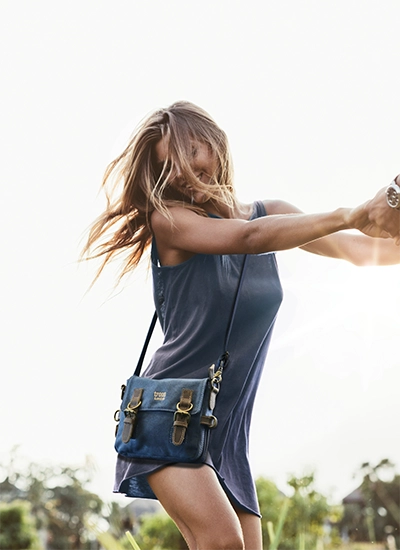
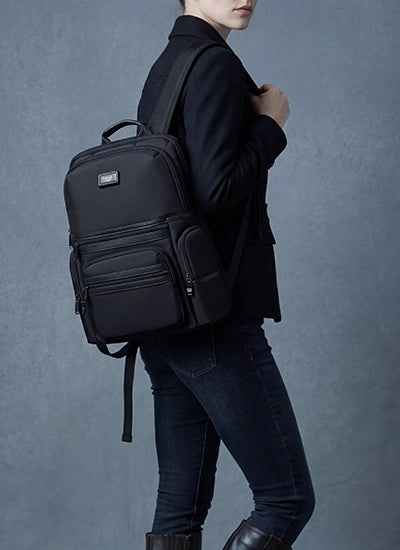
The best handmade bags are also the most versatile. A well-chosen canvas messenger or a structured leather backpack works across contexts: commuting, weekends, travel, and evenings out. Choosing timeless design over trend means your bag remains relevant long after seasonal styles have faded.
Ethical, small-batch production by skilled artisans is the foundation of bags that genuinely last, and understanding this helps you ask better questions when you shop. Elevating style through craftsmanship is not about spending more; it is about spending smarter.
Here is a practical checklist for shopping with confidence:
- Examine the stitching inside and out. Consistent, tight hand-stitching signals quality construction.
- Check the hardware by opening and closing zips and buckles several times. Smooth, solid action indicates quality components.
- Ask about the origin of the bag and who made it. Transparent brands will answer readily.
- Look for certifications or artisan marks that confirm genuine handwork.
- Assess the material by touch. Quality canvas or leather has a distinct weight and texture that synthetic alternatives cannot replicate.
- Consider versatility before buying. A bag that works across multiple settings offers far better value than a single-use piece.
- Think long-term by calculating cost-per-use rather than focusing on the upfront price alone.
Pro Tip: Ask the retailer directly where and how the bag was made. A brand confident in its craftsmanship will always be happy to share that story. Silence or vague answers are a warning sign worth heeding.
Find your perfect handmade bag with Troop London
If this guide has shifted how you think about bags, the next step is finding pieces that genuinely live up to these standards. Troop London brings together everything covered here: ethical production, durable organic canvas, timeless design, and the kind of craftsmanship that improves with every year of use.

From structured backpacks to versatile messenger bags and crossbody styles, every piece in the Troop London range is built to be carried daily and loved for years. The Classic, Heritage, and Urban collections each offer distinct aesthetics without compromising on quality or values. If you are ready to invest in something that genuinely reflects your style and principles, browse handmade bags and find the piece that will carry your story forward.
Frequently asked questions
How can you tell if a bag is truly handmade?
Look for subtle variations in stitching, hand-cut edges, and artisan signatures inside the bag. Certifications like Fatto a Mano confirm that at least 70% of production was completed by hand, offering a reliable benchmark for authenticity.
Are handmade bags always more expensive than factory-made?
Handmade bags typically cost more upfront, but the cost-per-use advantage makes them better value over time, given that 85% last over seven years compared to just 30% of mass-produced alternatives.
Do handmade bags help the environment?
Yes. Small-batch artisan production generates significantly less waste than factory methods, supports ethical labour practices, and reduces the environmental cost of frequent replacements.
Is machine-made always worse in quality?
Not always. Well-made machine bags from reputable manufacturers can offer genuine durability and consistency, making them a sensible choice for buyers with practical needs or tighter budgets.