




Cotton vs canvas: which fabric is best for bags?
TL;DR:
- Cotton is lightweight, soft, breathable, but less durable for heavy use.
- Canvas is heavy-duty, tightly woven, and built for strength and longevity.
- Fabric weight and weave determine bag performance more than material labels.
Cotton and canvas are often treated as the same thing. Walk into any shop, browse any accessories website, and you’ll see the terms used almost interchangeably. But they aren’t the same, and that distinction matters far more than most people realise. If you’ve ever bought a bag that wore out faster than expected, or felt flimsy after a handful of washes, the fabric choice was likely the culprit. Understanding the real differences between cotton and canvas gives you a genuine advantage when choosing bags and accessories that will actually last.
Table of Contents
- What is cotton? Types, properties and typical uses
- What is canvas? Construction, unique features and strengths
- Direct comparison: cotton vs canvas performance in bags and accessories
- Care tips: making your cotton and canvas bags last
- Why choosing by fabric weight and weave matters more than you think
- Discover stylish, durable canvas bags for every journey
- Frequently asked questions
Key Takeaways
| Point | Details |
|---|---|
| Cotton is lighter | Cotton fabrics are lightweight, breathable, and suited to casual, low-stress uses. |
| Canvas is stronger | Canvas features a tighter weave and heavier weight, making it ideal for long-lasting, durable bags. |
| Performance depends on weight | The real difference lies in the weight and weave, not just the fibre—so check bag specs before buying. |
| Proper care extends life | Your bag’s longevity depends on maintenance practices and correct washing for its primary fabric. |
What is cotton? Types, properties and typical uses
Cotton is both a natural fibre and a broad category of woven fabrics. That’s where the confusion starts. When most people say “cotton,” they might mean the raw fibre, a soft jersey t-shirt, or a lightweight calico tote. These are very different things in terms of structure and performance.
Cotton refers to lighter-weight, loosely woven fabrics like calico, muslin, or standard cotton, all made from the same natural fibre but constructed differently. The weave and weight determine how the fabric behaves in real use. Lightweight cotton fabrics typically fall in the 4 to 6 oz per square yard range, which gives them their characteristic softness and drape.
Here’s what makes standard cotton fabrics stand out:
- Soft and comfortable against the skin, making them ideal for linings and casual wear
- Breathable due to the open weave structure, which allows air to circulate freely
- Flexible and lightweight, so bags made from these fabrics fold flat and pack easily
- Affordable and widely available, making them popular for promotional totes and drawstring bags
- Naturally absorbent, which is great for clothing but less ideal for bags carrying valuable items
The typical uses for lightweight cotton fabrics include casual fashion, inner bag linings, light totes, and drawstring bags. They look lovely and feel pleasant to handle. Style-wise, cotton has a clean, natural aesthetic that suits relaxed, everyday looks. It pairs well with casual outfits and works brilliantly for short shopping trips or carrying gym kit.
Where cotton falls short is in durability under sustained use. An open weave means less resistance to abrasion, tearing, and moisture. For anyone comparing cotton vs polyester properties for bags, cotton’s breathability is an asset, but its lower resilience is a real limitation for anything beyond light daily use.
Pro Tip: Blending cotton with synthetic fibres like polyester or nylon can significantly improve tear resistance and reduce shrinkage after washing, making blended cotton fabrics a practical middle ground for casual accessories.
What is canvas? Construction, unique features and strengths
Canvas is not simply “thick cotton.” It’s a specific type of fabric defined by its construction. The key difference lies in how it’s woven and how heavy it is, not just what fibre it comes from.
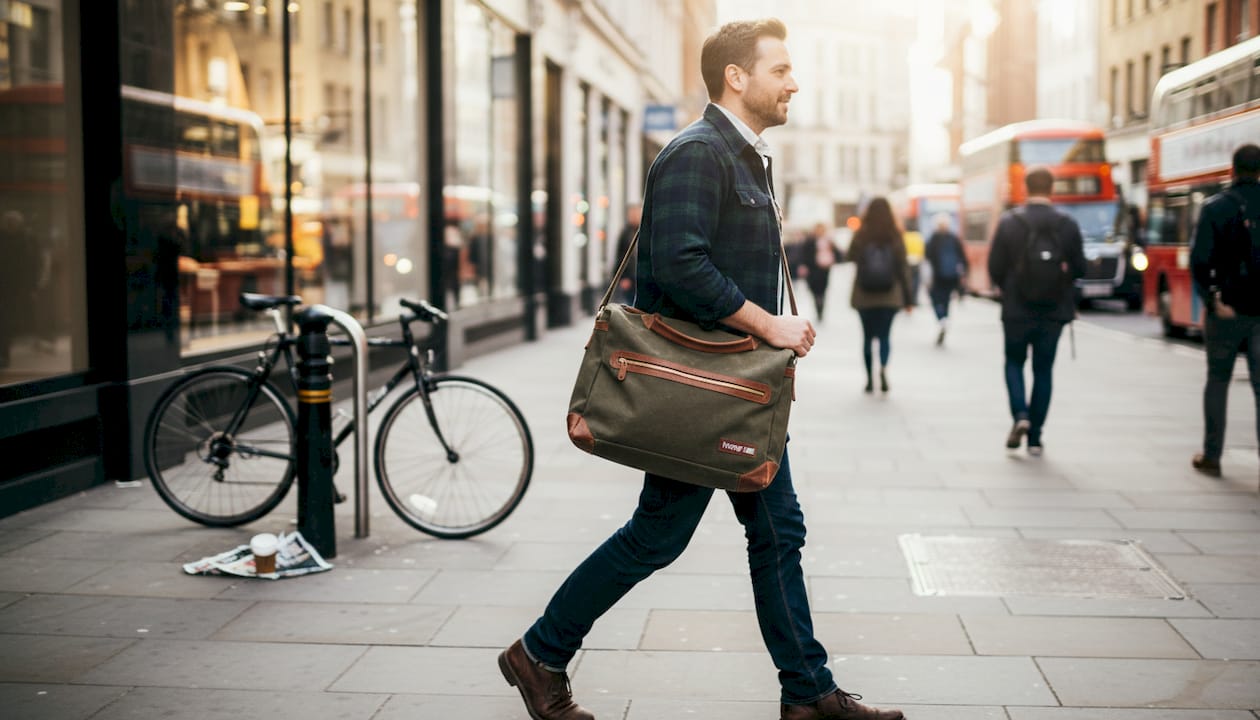
Canvas is a heavy-duty plain weave fabric typically made from cotton, linen, or hemp, distinguished by its tighter weave, thicker yarns, and higher weight, usually ranging from 7 to 32 oz per square yard. That weight range is enormous, and it explains why a lightweight canvas messenger bag and a heavy-duty military duffel feel so completely different, even though both are technically “canvas.”
The tighter weave is what gives canvas its strength. Each thread sits closer to its neighbours, leaving less space for abrasion to work its way through the fabric. This is why canvas has been used for centuries in sails, tents, and workwear, all applications where failure isn’t an option.
For bags and accessories specifically, canvas is the go-to choice for:
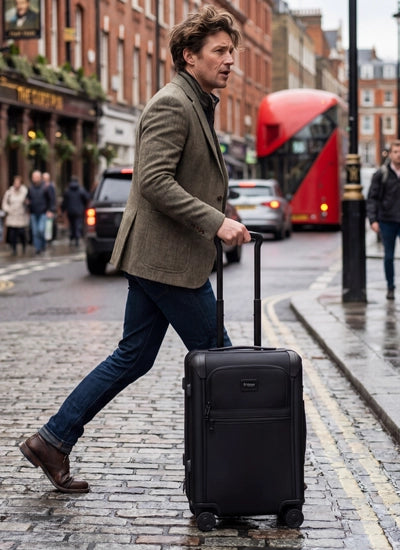
- Travel bags and holdalls that need to withstand being thrown in overhead lockers
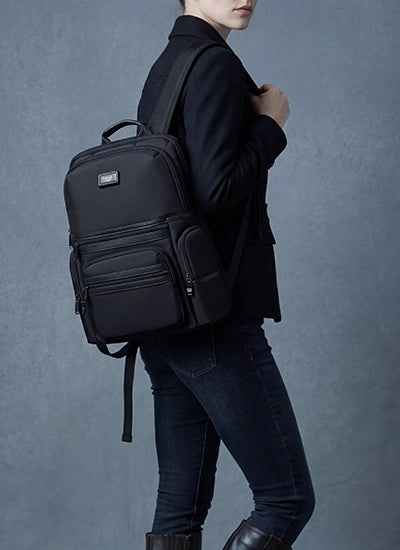
- Backpacks carrying heavy loads like laptops, books, and gym gear
- Messenger bags used daily across urban commutes
- Vintage-inspired accessories where a rugged, structured look is part of the appeal
Here’s a quick comparison to put the two fabrics in context:
| Feature | Standard cotton | Canvas |
|---|---|---|
| Weight range | 4 to 6 oz/yd² | 7 to 32 oz/yd² |
| Weave type | Open, loose | Tight, dense |
| Durability | Moderate | High to very high |
| Primary bag use | Light totes, linings | Backpacks, holdalls, travel bags |
| Water resistance | Low | Moderate to high |
| Texture | Soft, flexible | Firm, structured |
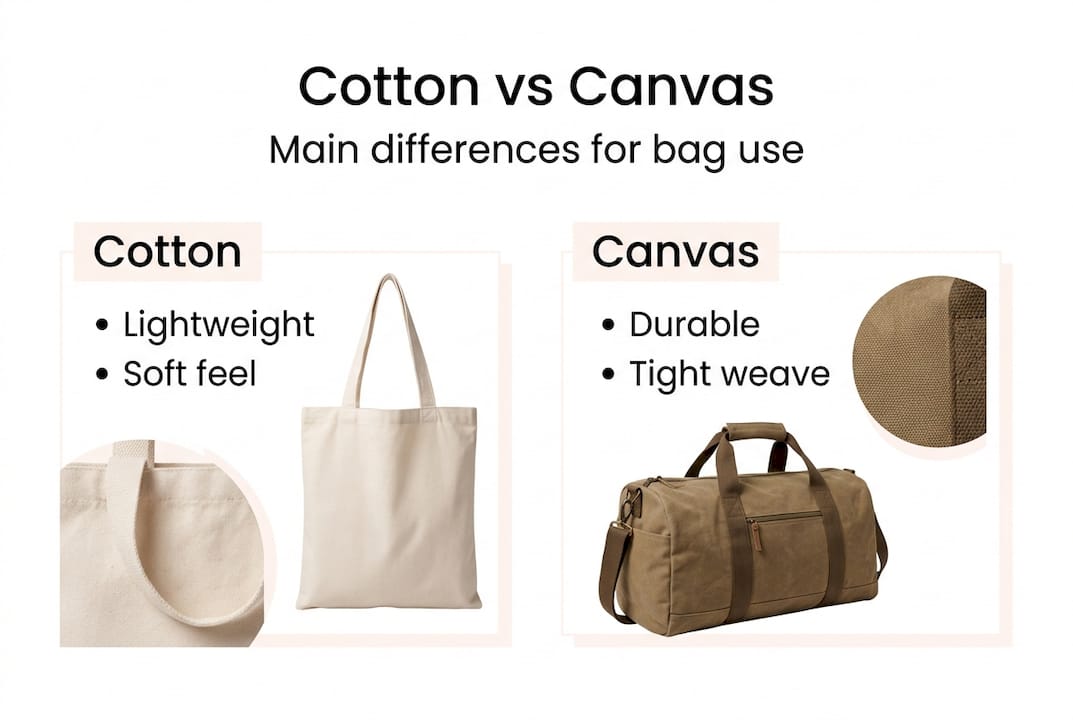
Canvas also carries a distinct aesthetic. It has a structured, purposeful look that communicates quality and longevity. If you want to choose durable canvas bags that hold their shape and age gracefully, canvas is the clear choice over lighter cotton alternatives.
Direct comparison: cotton vs canvas performance in bags and accessories
Now let’s get specific about what these differences mean when you’re actually using a bag day to day.
Canvas has superior durability for bags: its tighter weave resists tears and abrasion, with empirical data showing 12 oz cotton canvas achieving around 15,000 to 20,000 Martindale abrasion cycles and tensile strength of 150 to 200 lbf. A canvas tote typically lasts 1 to 3 years, compared to just 6 to 12 months for a standard cotton tote. That’s a significant difference in real-world value.
| Performance metric | Standard cotton | Canvas (12 oz+) |
|---|---|---|
| Abrasion resistance | Low | High (15k to 20k cycles) |
| Wash cycles survived | 4 to 7 | 12 to 16 |
| Weight capacity | Light loads | Heavy loads |
| Typical lifespan | 6 to 12 months | 1 to 3 years |
| Shape retention | Poor | Good to excellent |
So when should you choose which? Here’s a practical guide:
- Choose cotton for light everyday use, short shopping trips, or when softness and packability matter most
- Choose canvas for commuting, travel, carrying a laptop, or any bag that needs to hold its shape under load
- Choose canvas when you want a bag that develops character and looks better with age
- Choose cotton when you need a lightweight, foldable bag for occasional use
It’s also worth knowing where twill fits in. Twill is a diagonal weave that sits between standard cotton and heavy canvas in terms of durability. It offers better tear resistance than plain-weave cotton and washes more easily than heavy canvas, making it a solid option for most durable canvas bag comparisons where flexibility matters. For anyone weighing up materials more broadly, the canvas vs leather debate is also worth exploring, particularly for travel and everyday carry.
Pro Tip: Always turn a canvas bag inside out before machine washing. This protects the outer surface from friction against the drum and helps the bag retain its colour and texture for far longer.
Care tips: making your cotton and canvas bags last
Understanding performance is only half the equation. Caring properly for your bag makes all the difference.
Heavy canvas survives 12 to 16 wash cycles, while light cotton manages only 4 to 7 before showing significant wear. Canvas totes last 1 to 3 years, cotton totes just 6 to 12 months. But these figures assume reasonable care. Poor washing habits can cut those numbers dramatically.
Follow these steps to get the most from your bags:
- Check the care label first. Every bag is different. Some canvas bags include leather trim or metal hardware that shouldn’t be submerged.
- Use cold water for both cotton and canvas. Hot water causes shrinkage and can weaken fibres over time.
- Choose a gentle, mild detergent. Harsh chemicals break down the weave structure faster than regular use ever would.
- Wash on a gentle cycle or hand wash for best results. Heavy canvas bags particularly benefit from hand washing to preserve their shape.
- Reshape while damp. Canvas especially benefits from being reshaped by hand before drying to prevent distortion.
- Air dry only. Never tumble dry cotton or canvas bags. Heat weakens fibres and causes shrinkage that’s impossible to reverse.
Common mistakes to avoid:
- Using biological detergents, which can degrade natural fibres
- Scrubbing stains aggressively, which damages the weave
- Leaving bags damp in enclosed spaces, which encourages mildew
- Overfilling bags regularly, which stresses seams and handles
A well-maintained canvas bag washed correctly and stored properly can last three times longer than one subjected to harsh detergents and tumble drying. The fabric isn’t the only factor in longevity. How you treat it matters just as much.
For more detailed guidance, explore how to maintain canvas bag durability and follow essential care for canvas bags to build good habits from day one.
Why choosing by fabric weight and weave matters more than you think
Here’s the contrarian view that most buying guides won’t tell you: the label saying “cotton” or “canvas” matters far less than the actual weight and weave of the fabric.
We’ve seen two bags both marketed as “canvas” perform completely differently. One lasted years of daily commuting. The other frayed at the seams within months. The difference wasn’t the fibre. It was the weight. One was a 7 oz canvas, the other a 14 oz. Same label, completely different product.
Durability hinges on weight and weave over fibre alone. Heavy canvas beats twill and standard cotton in abrasion resistance, but twill actually performs better for tear resistance and machine washing. These nuances get lost entirely when brands simply stamp “canvas” on a product.
Marketing language is often imprecise. “Natural cotton” sounds premium. “Heavy-duty canvas” sounds rugged. But without a weight specification, these terms tell you almost nothing useful. Before buying, ask or check: what is the oz per square yard? Is the weave plain or twill? These two questions will tell you more about a bag’s real-world performance than any marketing copy.
When you’re deciding between materials more broadly, it also helps to understand choosing canvas or leather so you can match the material to your actual lifestyle, not just a trend.
Discover stylish, durable canvas bags for every journey
Now that you know what to look for, you can shop with real confidence. At Troop London, every bag is built with fabric weight and construction at the forefront of the design process, not as an afterthought.

Our canvas bags and accessories span the Classic, Heritage, and Urban collections, each crafted for a different pace of life but all built to last. Whether you’re after a structured backpack for the daily commute, a roomy holdall for weekends away, or a compact crossbody for lighter days, you’ll find bags made from quality canvas that genuinely stands up to real use. Browse the full range and find the bag that fits your life.
Frequently asked questions
Is canvas always made from cotton?
No, canvas can be made from cotton, linen, or hemp, though cotton canvas is by far the most common choice for bags and accessories.
Which is more waterproof: cotton or canvas?
Canvas resists water better than standard cotton because its tight weave limits moisture penetration, and it can also be treated with wax or spray for full waterproofing.
How long does a cotton or canvas tote bag usually last?
A standard cotton tote typically lasts 6 to 12 months, while a canvas tote can last 1 to 3 years or longer when cared for properly.
Does canvas feel rougher than cotton?
Yes, canvas is generally thicker and stiffer than standard cotton, but it softens noticeably with regular washing and wear over time.
Recommended
- Which Is the Better Bag for You - Waxed Canvas or Leather
- How to Choose Canvas Bags for Style and Durability
- Cotton vs Polyester - Which Material Is Best for Canvas Bags
- Leather Vs. Canvas - Which Bag Material Should You Choose
- Cotton Drapery Explained: Style, Durability, and Impact – Shop Designer Fabrics by the Yard | Curtains & Drapery