



Canvas Bag Care: Preserve Style and Longevity
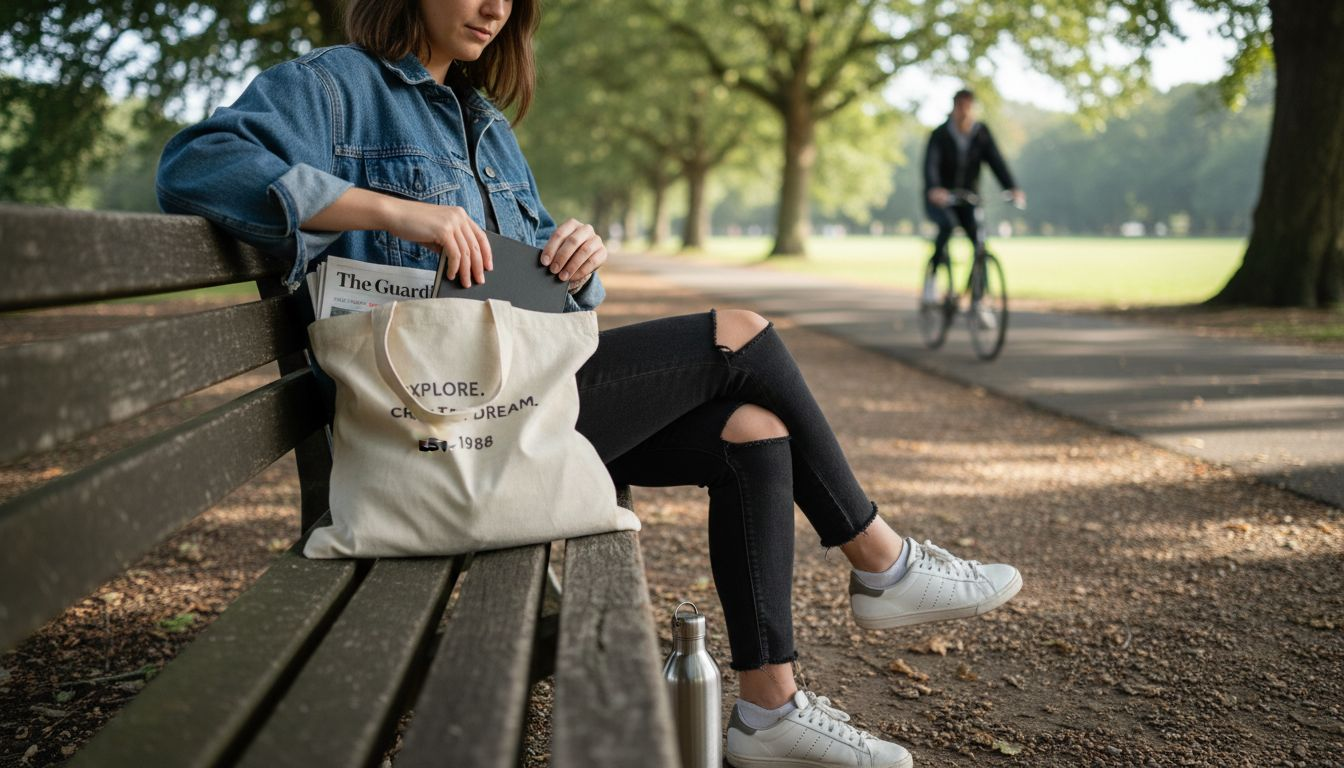
More than 60 percent of British adults now choose canvas bags for both their practicality and sense of style. For fashion-conscious people in the UK, a canvas tote is much more than just a bag—it is a staple accessory that faces the daily pressures of work commutes, shopping runs, and spontaneous city adventures. Making your canvas bag last longer while keeping it looking sharp requires the right upkeep, and there are smart solutions that every British owner can use to protect their favourite carryall.
Table of Contents
- Canvas Bags Explained: Materials And Durability
- Different Canvas Types And Their Needs
- Routine Cleaning For Everyday Freshness
- Deep Cleaning And Tough Stain Solutions
- Storage And Maintenance For Lasting Quality
- Mistakes To Avoid With Canvas Care
Key Takeaways
| Point | Details |
|---|---|
| Durability of Canvas | Canvas bags are designed for strength and longevity, making them suitable for everyday use and various adventures. |
| Different Canvas Types | Understanding the specific type of canvas is essential, as care requirements vary significantly between natural, hemp, and synthetic blends. |
| Routine Maintenance | Regular cleaning and proper drying techniques are crucial for preserving the appearance and integrity of your canvas bags. |
| Common Mistakes to Avoid | Overloading bags, using harsh chemicals, and improper storage can severely compromise the longevity of your canvas bags. |
Canvas Bags Explained: Materials and Durability
Canvas fabric represents an extraordinary intersection of durability and style, crafted primarily from robust cotton or linen fibres. Textile experts at the Tate confirm that canvas achieves its remarkable strength through a distinctive plain weave structure, which provides exceptional resistance to daily wear and tear.
The material’s inherent characteristics make it perfect for creating long-lasting bags that withstand significant usage. Canvas weaving involves tightly interlocking threads, creating a dense fabric that maintains structural integrity even under frequent stress. This means your canvas bag can accompany you through numerous adventures without showing immediate signs of degradation - whether you’re navigating urban landscapes or exploring countryside trails.
Durability in canvas bags extends beyond mere physical strength. Design strategies focused on longevity incorporate strategic reinforcements at critical stress points like handles, corners, and base. Manufacturers often add extra stitching, robust zippers, and protective treatments to enhance the bag’s resilience. These deliberate design choices transform a simple fabric into a dependable accessory that ages gracefully.
Expert Tip: When selecting a canvas bag, examine the weave density and inspect stitching quality to ensure maximum durability and long-term performance.
Different Canvas Types and Their Needs
Canvas fabrics are far from uniform, with each type offering unique characteristics that impact their performance and care requirements. Textile research reveals that canvas ranges from open weave to tightly woven structures, with plain-weave cotton canvas being the most prevalent in bag manufacturing.
The primary canvas varieties include natural cotton canvas, hemp canvas, and synthetic blended canvas. Sustainable materials research indicates that each type demands specific maintenance approaches. Natural cotton canvas is breathable and strong but requires gentle handling to prevent shrinkage, while hemp canvas offers remarkable durability and natural mildew resistance. Synthetic blends often combine the best properties of multiple materials, providing enhanced resilience and easier care.
Understanding your specific canvas type is crucial for appropriate maintenance. Cotton canvas typically needs careful washing with mild detergents, hemp canvas tolerates more robust cleaning methods, and synthetic blends might require specialised treatments. The weave density, thread count, and material composition will ultimately determine the most suitable cleaning and preservation techniques for your canvas bag.
Practical Tip: Always check the manufacturer’s care label and perform a spot test on an inconspicuous area before applying any cleaning method to your canvas bag.
Here is a comparison of common canvas materials and their care requirements:
| Canvas Type | Durability Level | Key Feature | Best Cleaning Approach |
|---|---|---|---|
| Natural Cotton Canvas | Moderate to strong | Breathable, flexible | Mild detergent, gentle wash |
| Hemp Canvas | Exceptionally strong | Naturally mildew-resistant | Firm brushing, robust wash |
| Synthetic Blend Canvas | High resilience | Enhanced resistance, easy care | Specialised cleaner, quick drying |
Routine Cleaning for Everyday Freshness
Effective cleaning protocols for canvas bags begin with understanding the importance of regular maintenance. Surface dirt accumulation can compromise both the aesthetic appeal and structural integrity of your favourite canvas accessory, making routine care essential for preserving its original quality and appearance.
The cleaning process involves several strategic steps. Start by emptying the bag completely and gently brushing off loose dirt with a soft-bristled brush. Prepare a mild cleaning solution using lukewarm water and a small amount of gentle, fabric-specific detergent. Avoid harsh chemicals that might degrade the canvas fibres. When spot cleaning, use a soft white cloth to prevent colour transfer, dabbing rather than rubbing to protect the fabric’s weave and prevent potential damage.
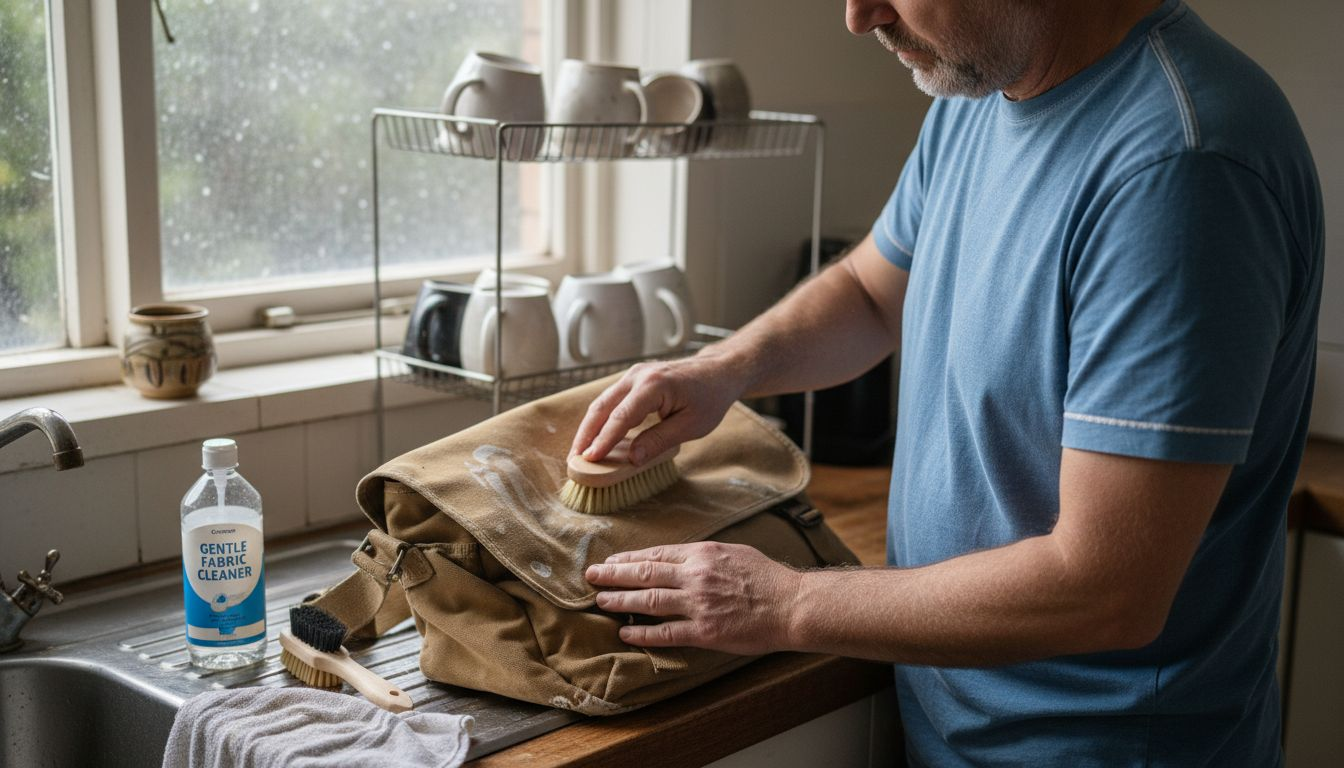
Systematic cleaning schedules are crucial for maintaining your canvas bag’s hygiene and longevity. For everyday bags exposed to urban environments, a thorough cleaning every two to three weeks is recommended. More frequently used bags might require more regular attention. Always air dry your canvas bag naturally, avoiding direct sunlight or heat sources that could cause shrinkage or fabric distortion. Proper drying prevents mould growth and helps maintain the bag’s structural integrity.
Practical Tip: Create a designated drying area with good air circulation and keep your canvas bag away from direct heat to ensure optimal preservation.
Deep Cleaning and Tough Stain Solutions
Chemical safety guidelines emphasise the critical importance of selecting appropriate cleaning agents for canvas bags. Different stains demand specific treatment strategies, ranging from gentle spot cleaning to more intensive deep cleaning techniques that preserve the fabric’s integrity without causing additional damage.
Tough stains like oil, wine, or mud require targeted approaches. For grease-based marks, sprinkle cornstarch or talcum powder to absorb excess oil before attempting cleaning. Red wine stains benefit from immediate salt application to prevent setting, followed by a gentle white vinegar solution. Mud stains should be allowed to dry completely before brushing off excess dirt, then treated with a mild detergent solution. Always test any cleaning solution on an inconspicuous area first to ensure it does not discolour or damage the canvas fabric.
The deep cleaning process requires methodical care. Prepare a cleaning solution using mild, fabric-safe detergent mixed with lukewarm water. Use a soft-bristled brush or white cloth to gently work the solution into stubborn stains, using minimal pressure to avoid damaging the canvas fibres. Rinse thoroughly with clean water to remove all soap residue, which can attract additional dirt if left behind. After cleaning, reshape the bag and allow it to air dry completely in a well-ventilated area, away from direct heat or sunlight.
Practical Tip: Invest in a white microfibre cloth for stain removal to prevent colour transfer and minimise potential fabric damage during cleaning.
Storage and Maintenance for Lasting Quality
Health and safety guidelines underscore the critical importance of proper canvas bag storage, which goes far beyond simply finding a convenient space. The environment where you store your canvas bag directly impacts its longevity, structural integrity, and overall aesthetic appeal.
Environmental considerations play a crucial role in canvas bag preservation. Avoid storing bags in areas with high humidity, direct sunlight, or extreme temperature fluctuations. Ideal storage locations include cool, dry spaces with consistent ambient conditions. For extended storage periods, consider using archival-quality storage techniques that involve breathable cotton dust bags or pillowcases that allow air circulation while protecting the canvas from dust and potential environmental degradation.
Periodic maintenance is equally important for prolonging your canvas bag’s life. Conduct quarterly inspections to check for loose threads, minor wear, or potential structural weaknesses. Gently reshape the bag after each use, ensuring zippers are closed and straps are not twisted. If possible, stuff the bag lightly with acid-free tissue paper to help maintain its shape during storage, preventing unnecessary creasing or fabric stress. Remove any items from interior pockets to prevent stretching and potential permanent deformation of the canvas material.
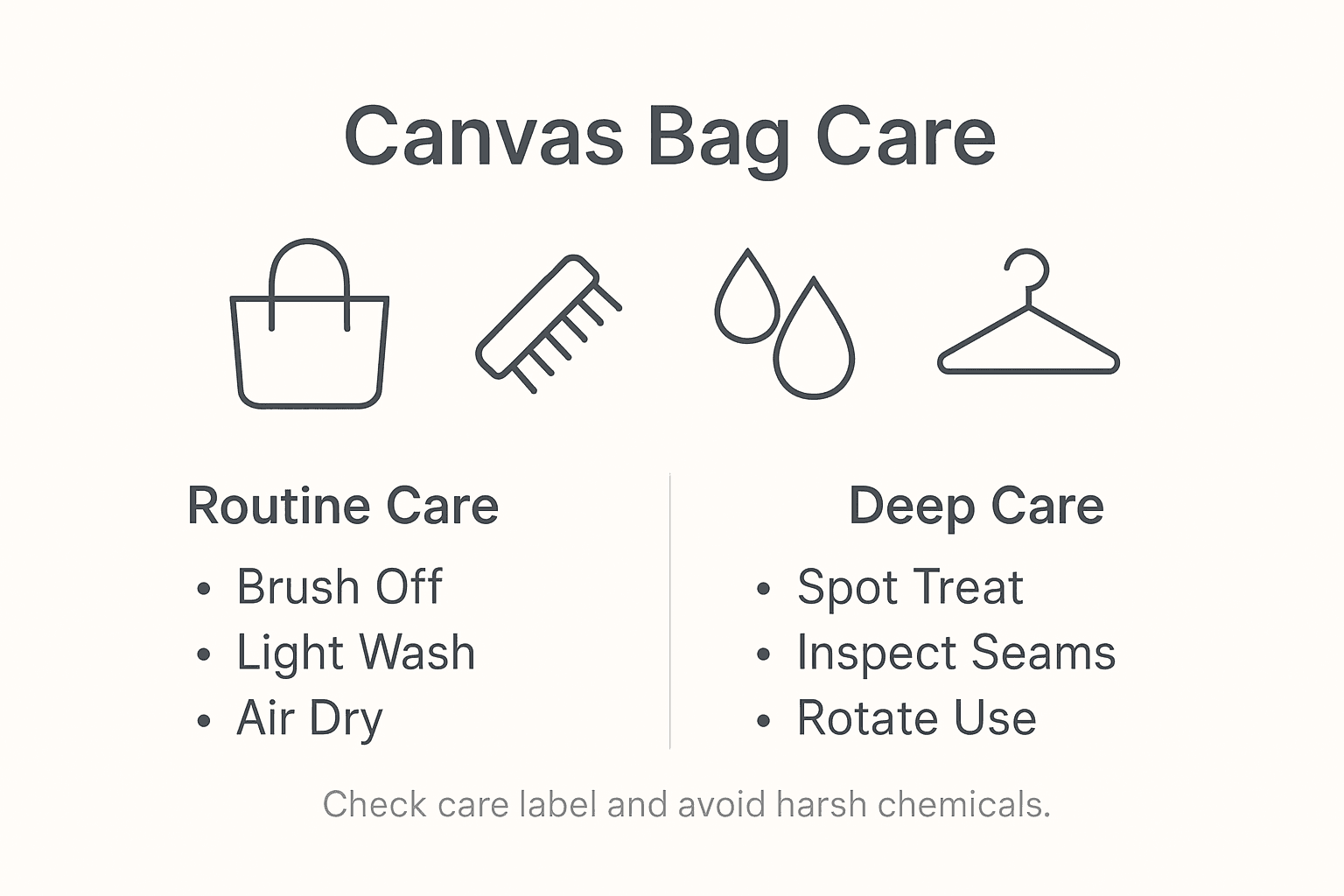
Practical Tip: Create a dedicated storage area for your canvas bags, using padded hangers or shelves that support the bag’s natural shape and prevent unnecessary strain on handles and seams.
Mistakes to Avoid with Canvas Care
Manual handling guidelines highlight critical errors that can significantly compromise your canvas bag’s longevity. One of the most common mistakes is overloading the bag beyond its designed weight capacity, which places excessive strain on seams, handles, and fabric structure.
Chemical misuse represents another substantial risk to canvas bag preservation. Harsh cleaning agents can strip natural fibres of their protective qualities, causing rapid degradation. Systematic care research reveals that inappropriate cleaning methods often cause more damage than the original stains. Avoid bleach, harsh detergents, and aggressive scrubbing techniques that can weaken canvas fibres and cause permanent discolouration.
Storage mistakes frequently undermine canvas bag durability. Storing bags in damp environments promotes mildew growth, while direct sunlight exposure causes rapid colour fading and fabric weakening. Improper folding creates permanent creases that compromise the bag’s structural integrity. Additionally, hanging bags by their straps can stretch the material, leading to permanent deformation of the bag’s original shape.
Practical Tip: Rotate your canvas bags during storage and avoid hanging them by their straps to prevent unnecessary fabric stress and maintain their original structural design.
The following table summarises frequent mistakes and the impact on canvas bag longevity:
| Mistake | Negative Effect | Prevention Technique |
|---|---|---|
| Overloading bag | Ruined seams, distortion | Respect weight limits |
| Harsh chemical usage | Fibre breakdown, fading | Use only approved cleaning agents |
| Bad storage conditions | Mould, fading, creasing | Store in dry, cool location |
| Hanging by straps | Permanent shape change | Use shelves or padded hangers |
Protect Your Canvas Bag With Expert Craftsmanship and Timeless Style
Preserving the durability and unique charm of your canvas bag is a challenge many face, as emphasised in the detailed guide on canvas bag care. From understanding fabric weave density and avoiding harsh cleaning chemicals to proper storage that prevents creasing and mildew, these essential steps contribute to your bag’s longevity and sustained style. If you seek canvas accessories that combine these principles with exceptional craftsmanship look no further than the curated collections at Troop London.

Explore durable vintage-inspired backpacks, messenger bags, and crossbody bags thoughtfully designed with reinforced stitching and sustainable materials that echo the best care practices highlighted in the article. Don’t compromise on style or endurance when you can invest now in a bag that grows more reliable with time. Visit Troop London today to find your perfect canvas companion and enjoy timeless designs built to last.
Frequently Asked Questions
What materials are canvas bags made from?
Canvas bags are primarily made from robust fibres such as cotton or linen. Variants include natural cotton canvas, hemp canvas, and synthetic blended canvas, each offering unique characteristics in terms of durability and care requirements.
How do I clean my canvas bag properly?
To clean your canvas bag, start by brushing off loose dirt. Use a mild cleaning solution of lukewarm water and gentle detergent. Spot clean using a soft white cloth and dab gently to prevent damage. Air dry naturally, avoiding direct sunlight or heat sources.
How can I prevent stains on my canvas bag?
To prevent stains, avoid exposing your canvas bag to potential stain sources like oil or food. If stains occur, treat them promptly using appropriate solutions such as cornstarch for grease or salt for red wine. Always test any cleaning agent on an inconspicuous area first.
What storage tips should I follow for my canvas bag?
Store your canvas bag in a cool, dry place away from direct sunlight and humidity. Use breathable dust bags for protection and conduct periodic inspections to check for wear or damage. Reshape the bag after use and avoid hanging it by its straps to maintain its form.