





Backpack organisation tips for effortless city commuting
You’re on the platform, the train is pulling in, and you’re elbow-deep in your backpack hunting for your Oyster card. Sound familiar? A disorganised bag is more than a minor annoyance — it costs you time, raises your stress levels, and can even affect your posture over a long commute. Urban professionals and city travellers carry a remarkable amount of gear each day, and without a clear system, that gear becomes chaos. The good news is that a handful of practical, well-tested strategies can transform your daily carry into something genuinely effortless.
Table of Contents
- The core mechanics of effective organisation
- Smart strategies for city commuters
- Comparison: Minimalism versus modular organisation
- Decluttering and maintenance for daily efficiency
- Our perspective: What most commuters get wrong about backpack organisation
- Next steps: Elevate your commute with better gear
- Frequently asked questions
Key Takeaways
| Point | Details |
|---|---|
| Master the basics | Sort, categorise, and position items for both balance and accessibility before your commute. |
| Stick to safe weight limits | Keep your backpack weight under 12% of your body weight to avoid daily strain. |
| Choose your system | Opt for minimalism or modular pouches based on your personal city routine and item variety. |
| Maintain regularly | A weekly declutter will keep your backpack efficient and your routine stress-free. |
The core mechanics of effective organisation
Every well-packed backpack starts with the same simple act: emptying it completely. Before you can build a better system, you need to see what you’re actually carrying. Most commuters are surprised to find receipts from three weeks ago, duplicate cables, and items they haven’t touched in months.
The most reliable framework follows four clear steps, drawn from established packing guidance:
- Lay everything out on a flat surface and sort items into three groups: essentials you use daily, occasional items you might need, and unnecessary clutter to remove entirely.
- Pack heaviest items closest to your back, ideally in the main compartment against the padded panel. This keeps the centre of gravity aligned with your spine.
- Use pouches or packing cubes to group items by category: tech accessories together, documents together, personal care items together.
- Position quick-access items — phone, keys, transit card — in the top zip or an outer pocket where you can reach them without opening the main compartment.
This approach directly addresses what organisers call the ABC framework: Accessibility, Balance, and Compression. Accessibility means your most-used items are reachable in seconds. Balance means weight sits close to your body rather than pulling away from it. Compression means you’re not carrying air and dead space.
For practical backpack packing tips that go beyond the basics, it’s worth reviewing how experienced travellers approach even short urban trips with the same discipline as longer journeys.
Poor weight distribution doesn’t just feel uncomfortable. It actively increases muscle fatigue along the shoulders, neck, and lower back, making a long commute genuinely draining. Investing ten minutes in a proper pack before you leave pays dividends across the entire day.
Pro Tip: Once you’ve packed your bag, put it on and walk around your home for two minutes. If anything digs in or feels off-balance, adjust before you leave rather than suffering through it on the street.
For a broader view of the best organisers to use inside your bag, organiser recommendations from independent reviewers can help you choose the right pouches for your specific gear.
Smart strategies for city commuters
With the fundamentals in place, the next step is tailoring your approach to the specific demands of urban life. City commuting is different from hiking or leisure travel. You’re transitioning between environments — tube, office, café, gym — often within the same day.
One of the most overlooked factors is total weight. Backpack weight limits for commuters sit at 10 to 15 pounds maximum, with research suggesting your pack should not exceed 12% of your body weight. Beyond that threshold, your muscle activation patterns change, and fatigue sets in faster than you’d expect.
For managing weight balance tips across different bag styles, understanding how weight sits differently on a backpack versus a messenger bag is genuinely useful for city transitions.
Here’s what a smart modular setup looks like in practice:
- A dedicated tech pouch for cables, adaptors, and a portable charger
- A slim document sleeve for notebooks, cards, and your laptop if it doesn’t have its own compartment
- A personal care zip pouch for lip balm, paracetamol, and anything hygiene-related
- An easy-access outer pocket reserved exclusively for transit cards, earphones, and your phone
The 80/20 rule applies here too. Roughly 80% of your daily use comes from 20% of what you carry. Identify that 20% and make sure it lives in the most accessible part of your bag.
| Backpack type | Best for | Key feature | Limitation |
|---|---|---|---|
| Clamshell opening | Office commuters | Full access to contents | Bulkier profile |
| Top-loader | Casual city use | Lightweight and simple | Less organised access |
| Hybrid panel-loader | Multi-use days | Flexible compartments | Higher price point |
| Slim commuter pack | Minimal daily carry | Compact and sleek | Limited capacity |
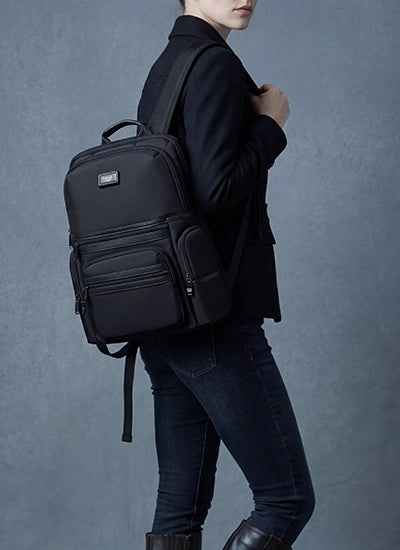
When choosing a backpack for city use, the opening style matters as much as the number of pockets. A clamshell design lets you see everything at once, which is invaluable when you’re rushing.
For further weight management guidelines tailored to everyday carry, it’s worth considering how your total load changes across different days of the week and planning accordingly.
Pro Tip: On heavy days — laptop, gym kit, lunch — redistribute weight by placing your water bottle in a side pocket rather than the main compartment. It shifts the load laterally and reduces strain on your lower back.
Comparison: Minimalism versus modular organisation
Once you understand smart commuting strategies, the bigger question is which organisational philosophy suits your lifestyle. There are two dominant schools of thought, and both have genuine merit depending on your situation.
Minimalism focuses on carrying as little as possible. The 5-4-3-2-1 rule is a popular framework: five essentials, four categories of items, three days’ worth of flexibility, two backup items, and one bag. It’s elegant, fast to pack, and forces you to make deliberate choices about what earns a place in your bag.
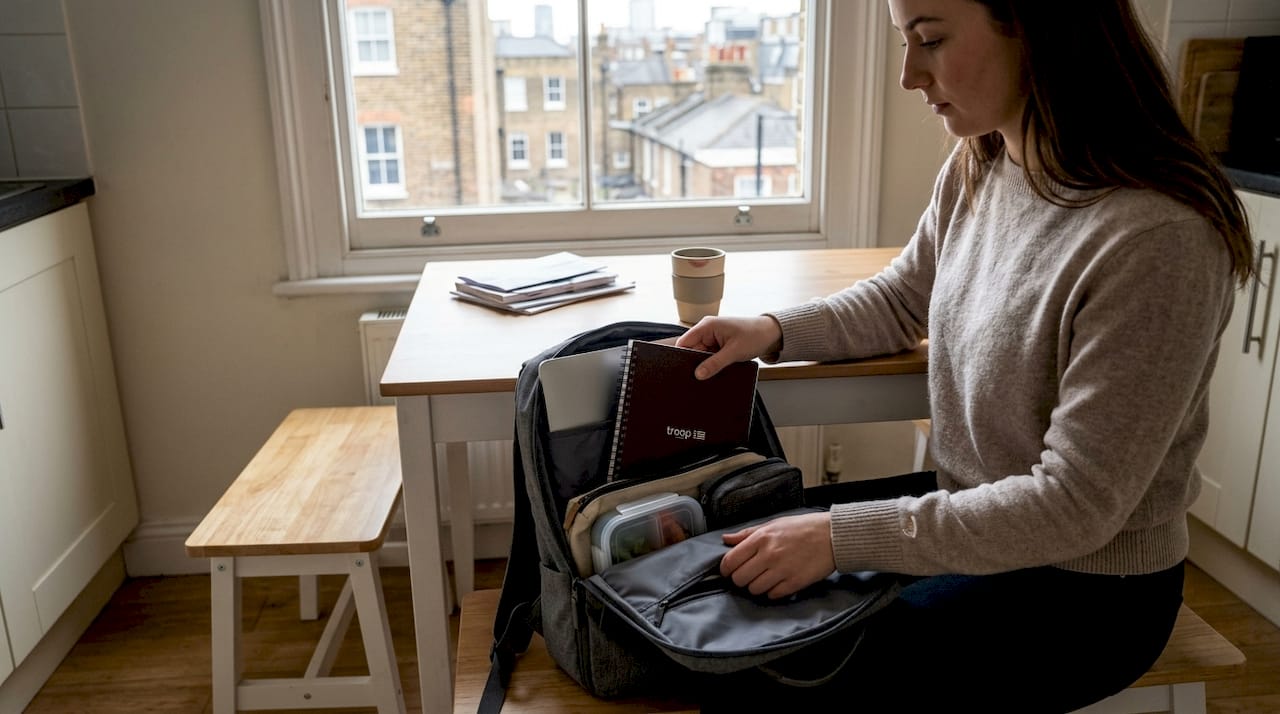
Modular organisation takes the opposite approach. Rather than reducing what you carry, it creates a structured home for everything. Packing cubes, zip pouches, and dedicated compartments mean you can carry more without creating chaos. For professionals who need to transition from a client meeting to a weekend trip without repacking, this approach is transformative.
For minimalist packing tips that work in real city conditions, the key is building a core kit that doesn’t change from day to day, then adding only what each specific day requires.
| Factor | Minimalism | Modular organisation |
|---|---|---|
| Packing speed | Very fast | Moderate |
| Ideal trip length | Day trips and short commutes | Multi-day or varied days |
| Item variety | Low | High |
| Weight | Lightest possible | Slightly heavier |
| Flexibility | Limited | High |
Key questions to help you decide:
- Do you carry the same items every day, or does your load vary significantly?
- How much time do you have to pack in the morning?
- Do you transition between activities (office, gym, travel) within a single day?
- How many tech accessories and cables do you regularly carry?
“The most effective organisers review their bag contents every week, removing anything that hasn’t been used and reassessing whether their system still matches their current routine.” — expert organiser advice
Neither approach is universally superior. Many experienced city commuters use a hybrid: a minimalist core kit with one or two modular pouches for categories that genuinely vary.
Decluttering and maintenance for daily efficiency
Even the best packing system degrades without regular maintenance. Clutter accumulates gradually. A receipt here, a spare charger there, and within two weeks your carefully organised bag is a jumble again.
A weekly declutter routine is the single most effective habit for keeping your backpack efficient. It takes less than five minutes and prevents the slow creep of unnecessary weight.
Here’s a simple maintenance process:
- Empty the bag completely onto a flat surface once a week.
- Apply the three-second rule: if you can’t immediately recall why an item is in your bag, remove it.
- Wipe down the interior with a dry cloth to remove crumbs, dust, and debris.
- Return items to their designated pouches, not just the nearest available space.
- Check for wear: fraying zips, loose stitching, or damaged straps are easier to address early.
For gear care tips that extend the life of your bag, proper storage between uses matters more than most people realise. Hanging your bag rather than leaving it slumped on the floor preserves the shape and structure of the compartments.
For a broader look at why backpacks as daily essentials deserve more thoughtful investment, it’s worth considering how much of your daily comfort and efficiency depends on this single piece of kit.
For practical cable organiser tips, a small dedicated pouch for tech items alone can eliminate the most common source of backpack frustration: untangling cables in a hurry.
Pro Tip: Add a five-minute bag check to your Sunday evening routine. It takes less effort than you think and means Monday morning starts without the usual scramble.
The three-second rule is deceptively powerful. Most people hold onto items out of vague possibility rather than genuine need. Applying that brief mental test consistently keeps your bag honest.
Our perspective: What most commuters get wrong about backpack organisation
Here’s the uncomfortable truth: most urban professionals don’t have a packing problem. They have a decision problem. The bag gets heavy because making a choice about what to leave behind feels harder than just throwing everything in. The result is a bag that weighs twice what it should and takes twice as long to search through.
The real shift happens when you stop treating your backpack as a portable storage unit and start treating it as a curated daily toolkit. That means building a lifestyle-matched system rather than copying someone else’s setup.
Another common mistake is repacking from scratch every single day. This wastes time and invites inconsistency. A fixed core kit — items that live in your bag permanently — combined with a small variable layer for daily additions is far more efficient. It also means you’re less likely to forget something important.
Organisation hacks are everywhere online, but the ones that actually stick are the ones that match your specific rhythm. Invest in understanding your own routine before investing in more gear.
Next steps: Elevate your commute with better gear
Putting these strategies into practice becomes significantly easier when your bag is designed to support them. A backpack with well-placed compartments, quality zips, and thoughtful structure does half the organisational work for you before you’ve packed a single item.

At Troop London, every backpack in the collection is built with the urban commuter in mind. From the Classic range to the Heritage and Urban collections, each design balances durable canvas construction with practical internal layouts. Whether you’re optimising for a daily office run or a weekend city break, there’s a bag designed to work with your system, not against it. Browse the full collection and find the pack that fits your city life.
Frequently asked questions
What is the best way to organise a work backpack for daily commuting?
Lay out all items, group essentials by category in pouches, place heavy items near your back, and keep daily-use objects in the top or front pocket for fast access.
How heavy should a commuter backpack be?
A commuter backpack should be no more than 10 to 15 pounds, or roughly 12% of your body weight, to prevent muscle strain and joint stress.
Is minimalism or modular organisation better for city travel?
Minimalism suits ultra-light daily use, while modular pouches work best for those who need to switch between activities without repacking everything.
How often should I declutter my backpack?
A weekly declutter session is ideal to keep your backpack efficient and prevent unnecessary weight from accumulating over time.


