Step-by-Step Guide to Packing Messenger Bags Effectively
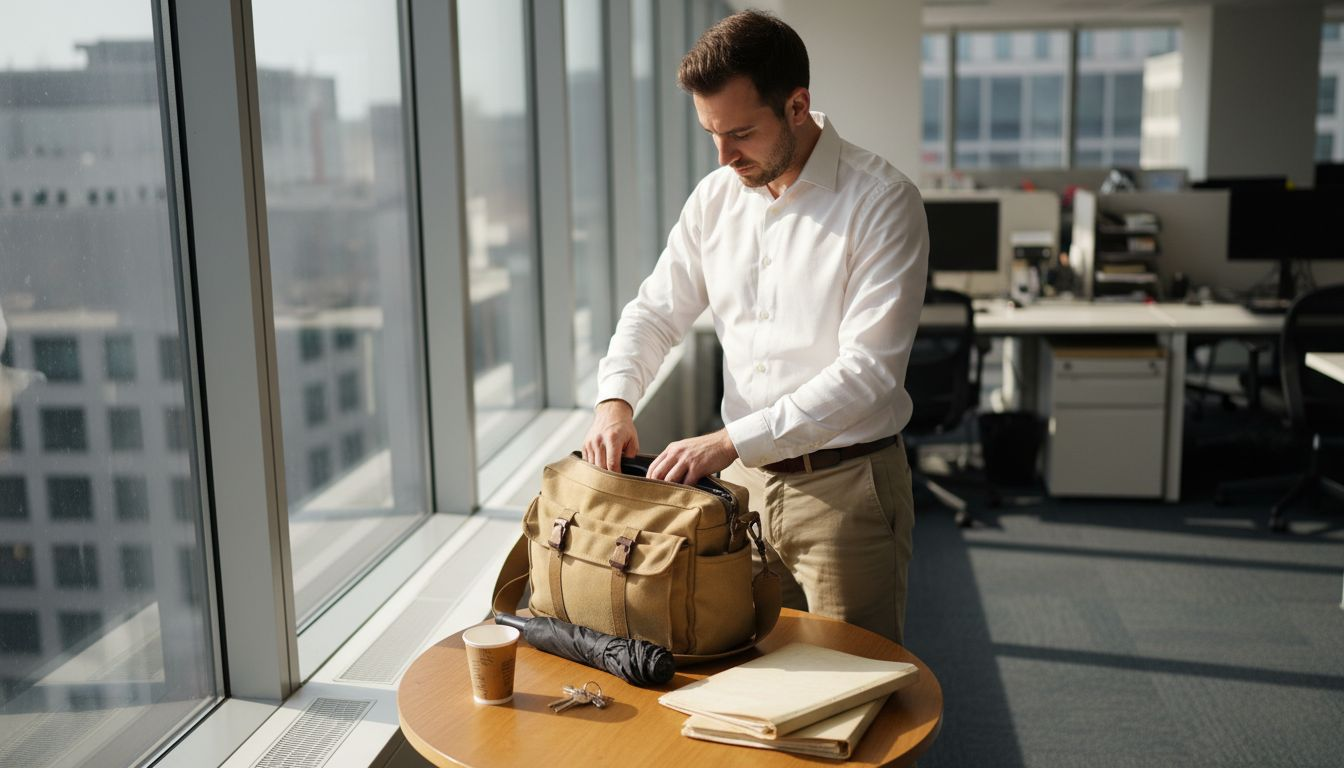
Rushing from lecture halls to the office means your bag needs to handle much more than just tech and textbooks. For style-savvy students and young professionals across the United Kingdom, a well-organised messenger bag has become a daily necessity, seamlessly blending practicality with a smart look. Choosing the right bag and packing technique not only enhances comfort and confidence but also helps you keep daily essentials secure and accessible, turning your bag into a dependable part of your routine.
Table of Contents
- Step 1: Assess Daily Essentials And Bag Requirements
- Step 2: Sort And Categorise Your Items For Packing
- Step 3: Optimise Organisation Using Bag Compartments
- Step 4: Arrange Your Items For Balanced Weight
- Step 5: Check Accessibility And Security Of Packed Items
Quick Summary
| Key Insight | Explanation |
|---|---|
| 1. Conduct a daily essentials inventory | Evaluate and list items you frequently carry to ensure your messenger bag meets your daily needs. |
| 2. Categorise items for efficient packing | Group your belongings into categories to simplify access and organisation within the bag. |
| 3. Use compartments strategically | Ensure items are organised based on weight and frequency of use, utilising the bag’s design effectively. |
| 4. Balance weight distribution | Keep heavier items close to your body and distribute weight evenly to reduce shoulder strain. |
| 5. Ensure accessibility and security | Position essentials for quick access while safeguarding valuable items within secure compartments. |
Step 1: Assess daily essentials and bag requirements
Packing a messenger bag effectively begins with a strategic evaluation of your daily needs and the specific requirements of your lifestyle. The goal is to create a personalised, efficient system that keeps your essentials organised and easily accessible. Choosing the right messenger bag configuration depends on understanding your unique daily demands.
Start by conducting a comprehensive inventory of the items you routinely carry. These typically include:
- Electronic devices (laptop, tablet, smartphone)
- Charging cables and power banks
- Work or study documents
- Writing implements
- Personal hygiene items
- Water bottle
- Wallet and keys
- Emergency medical supplies
Consider your typical daily routine and weight distribution requirements. A messenger bag should balance comfort with functionality, ensuring that heavier items are positioned to minimise strain on your shoulder and back. Think about the volume of items you need to transport and select a bag with appropriate compartments and capacity.
Your messenger bag is more than just a carrying solution - it’s a portable organisation system tailored to your lifestyle.
Assess the materials and durability of potential bags, prioritising designs that offer protection for your most valuable items while providing flexibility for changing daily needs. Consider factors like water resistance, padding for electronic devices, and multiple internal organisational pockets.
Here is a comparison of common messenger bag materials and their daily benefits:
| Material | Durability | Water Resistance | Protection Level |
|---|---|---|---|
| Nylon | Highly durable | Excellent | Good for electronics |
| Canvas | Moderately durable | Moderate | Basic protection |
| Leather | Very durable | Low (unless treated) | Superior document padding |
| Polyester | Durable | High | Moderate protection |
Top tip: Create a ‘core essentials’ kit that remains permanently in your messenger bag, reducing daily packing stress and ensuring you never forget critical items.
Step 2: Sort and categorise your items for packing
Organising the contents of your messenger bag is crucial for maintaining efficiency and preventing unnecessary clutter. Efficient packing strategies can transform your bag from a chaotic storage space into a well-structured personal system.
Begin by categorising your items into clear, logical groups:
- Tech and Electronics: Laptop, chargers, power banks
- Work or Study Materials: Documents, notebooks, writing implements
- Personal Care: Hygiene items, small first-aid kit
- Everyday Essentials: Wallet, keys, smartphone
- Miscellaneous: Snacks, water bottle, emergency items
Consider using lightweight organisational tools like compact pouches or zippered compartments to separate these categories. This approach not only keeps items easily accessible but also protects delicate electronics and prevents smaller objects from getting lost in the bag’s depths.
Effective categorisation is the secret to transforming your messenger bag from a random storage space into a personalised mobile office.
Prioritise the placement of items based on frequency of use and weight. Heavier items should be positioned closer to your body to maintain balance, while frequently used items should be in easily reachable external or top compartments.
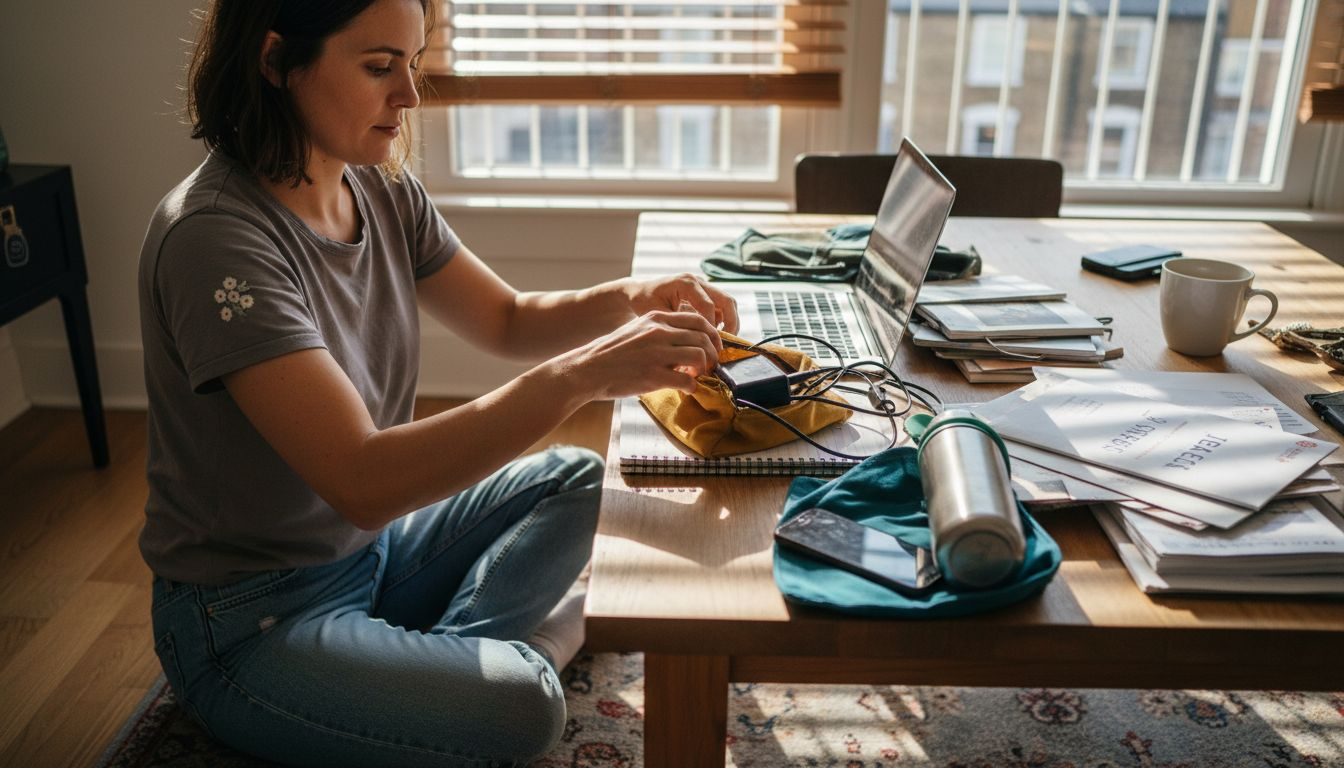
Top tip: Invest in a set of slim, colour-coded pouches to create an intuitive sorting system that helps you locate items instantly without rummaging.
Step 3: Optimise organisation using bag compartments
Maximising the functionality of your messenger bag requires strategic use of its built-in compartments. Messenger bag organisation techniques can transform your daily carry experience by ensuring every item has a designated space.
Understand the typical compartment layout of messenger bags:
- Main Compartment: Primary storage for larger items
- Laptop Sleeve: Dedicated protective section for electronic devices
- Front Organisational Pocket: Small items and quick-access essentials
- Side Pockets: Water bottle or compact accessories
- Internal Zippered Sections: Secure storage for valuables
Prioritise placement based on item weight and frequency of use. Heavier items should be positioned closer to your body to maintain balance and reduce strain. Place frequently accessed items like smartphones and wallets in easily reachable external pockets.
Strategic compartment usage turns your messenger bag from a simple carrier into a personalised mobile command centre.
Utilise internal organisational features such as pen loops, key clips, and small zippered pouches to prevent items from getting lost or damaged. Consider the padding and protection offered by different compartments, especially for fragile electronics and important documents.
This summary highlights the roles of messenger bag compartments and ideal contents:
| Compartment | Primary Purpose | Recommended Contents |
|---|---|---|
| Main Section | Store bulkier items | Laptop, books, documents |
| Laptop Sleeve | Device protection | Laptop, tablet |
| Front Pocket | Quick access | Phone, wallet, keys |
| Side Pocket | Beverage or accessories | Water bottle, umbrella |
| Internal Zipped Area | Secure valuables | Passport, emergency cash |
Top tip: Invest in slim, clear organisational pouches that allow you to quickly visualise and access your bag’s contents without unnecessary rummaging.
Step 4: Arrange your items for balanced weight
Effective weight distribution strategies are crucial for preventing shoulder strain and maintaining comfort when using a messenger bag. Unlike backpacks that evenly distribute weight across both shoulders, messenger bags require deliberate and strategic item placement.
Follow these guidelines for optimal weight distribution:
- Place heaviest items closest to your body
- Position laptops and tablets against the back panel
- Distribute medium-weight items around the central compartment
- Keep lightweight accessories in external pockets
- Avoid overloading one side of the bag
Vertical weight arrangement is particularly important. Heavier items should be positioned lower in the bag to minimise shoulder tension and prevent unnecessary strain. This approach helps maintain a more natural carrying position and reduces the risk of long-term muscular discomfort.
Balanced packing is not just about organisation - it’s about protecting your physical wellbeing.
Consider the total weight of your bag and aim to keep it under 10% of your body weight. Regularly audit and remove unnecessary items to maintain a lightweight, efficient messenger bag that supports your daily mobility.
Top tip: Periodically alternate which shoulder you carry your messenger bag on to prevent muscle imbalance and reduce potential long-term postural issues.
Step 5: Check accessibility and security of packed items
Security considerations for packing personal bags are crucial for maintaining both convenience and protection of your belongings. Ensuring quick access to essential items while maintaining their security requires a strategic approach to messenger bag organisation.
Implement these accessibility and security checks:
- Proximity of Critical Items: Keep passport, wallet, and phone in easily reachable zippered compartments
- Electronic Device Protection: Use padded sections for laptops and tablets
- Secure Valuable Locations: Place important documents in internal, less accessible pockets
- Quick-Access Zones: Designate specific external pockets for frequently used items
- Anti-Theft Considerations: Choose compartments with secure closures
Vertical item placement matters significantly for both accessibility and security. Heavier, less frequently used items should be at the bottom of the bag, while lighter, essential items remain within immediate reach. This strategy prevents constant rummaging and reduces the risk of accidentally dropping valuable possessions.
Smart packing is about creating a personal system that protects your belongings while keeping them conveniently available.
Regularly audit your bag’s contents, removing unnecessary items and ensuring that high-value possessions are not visibly exposed. Consider using discrete inner pockets for items like credit cards and identification to minimise potential security risks.
Top tip: Invest in a messenger bag with RFID-blocking compartments to protect electronic payment cards from potential digital theft.
Master Your Messenger Bag Packing With Troop London
Struggling to achieve perfect organisation and balanced weight in your messenger bag? This guide breaks down the challenge of packing efficiently while keeping your essentials secure and accessible. Key issues such as strategic compartment use, durable protection for electronics, and creating a personalised system all point to one vital need: a high-quality bag that supports your lifestyle effortlessly.
Discover the craftsmanship and timeless design of Troop London. Their messenger bags are crafted from durable canvas with thoughtfully designed compartments that cater to your tech, documents and daily essentials ensuring you avoid shoulder strain and clutter. Ready to transform your daily carry? Explore the Classic Collection for vintage-inspired styles built to last and simplify your everyday packing. Visit Troop London now to invest in a functional, stylish messenger bag that protects your belongings and enhances your daily routine.
Frequently Asked Questions
How do I assess what to pack in my messenger bag?
Start by evaluating your daily essentials, including electronic devices, work documents, and personal items. Conduct a thorough inventory and prioritise items based on your daily routine and weight distribution to optimise comfort and accessibility.
What are the best ways to categorise items when packing a messenger bag?
Organise your items into clear groups, such as tech, work materials, and personal care. Use lightweight organisational tools like pouches or compartments to keep everything sorted and easily reachable, which will enhance your packing efficiency.
How should I arrange items in my messenger bag for balanced weight?
To achieve balanced weight distribution, place heavier items closer to your body and lighter items in external pockets. Aim for a total bag weight that remains manageable, ideally under 10% of your body weight, to reduce shoulder strain during use.
What should I consider for security and accessibility in my messenger bag?
Ensure critical items like your wallet and phone are kept in easily accessible yet secure compartments. Regularly audit your bag’s contents and choose compartments with secure closures for important documents to enhance both security and convenience.
How can I effectively maximise the space in my messenger bag?
Utilise each compartment intentionally by placing bulkier items in the main section, while keeping frequently used items in easy-access pockets. Consider investing in organisational pouches to visually separate and manage your belongings, which streamlines your packing process.