

Choosing the Best Backpack for Everyday Use: Step-by-Step
Tired of backpacks that look great but fail by midterm or after a soggy walk through Central London? For style-minded professionals and students, a backpack is more than fashion—it is your daily workhorse protecting devices and essentials from unpredictable British weather and commutes. Knowing how to assess your daily carrying needs and prioritise both style and enduring quality puts you on track to smart choices that reflect confidence and purpose. Start with a focus on sustainability and craftsmanship to find the right fit for your life.
Table of Contents
- Step 1: Assess Your Daily Carrying Needs
- Step 2: Select The Ideal Backpack Size And Style
- Step 3: Evaluate Material Quality And Craftsmanship
- Step 4: Compare Comfort And Functional Features
- Step 5: Verify Durability With Reviews And Guarantees
Quick Summary
| Key Point | Explanation |
|---|---|
| 1. Assess your daily carrying needs | Inventory your typical items to determine necessary backpack size and features for comfort and protection. |
| 2. Choose the right size and style | Select a backpack that balances capacity and style, catering to your personal aesthetics and functional needs. |
| 3. Evaluate material quality and craftsmanship | Focus on durable materials and craftsmanship indicators, ensuring the bag withstands daily use and weather conditions. |
| 4. Prioritise comfort features | Look for ergonomic designs that support weight distribution, preventing discomfort during extended wear. |
| 5. Research durability through reviews | Investigate product reviews and warranties to assess long-term reliability and performance of the backpack. |
Step 1: Assess Your Daily Carrying Needs
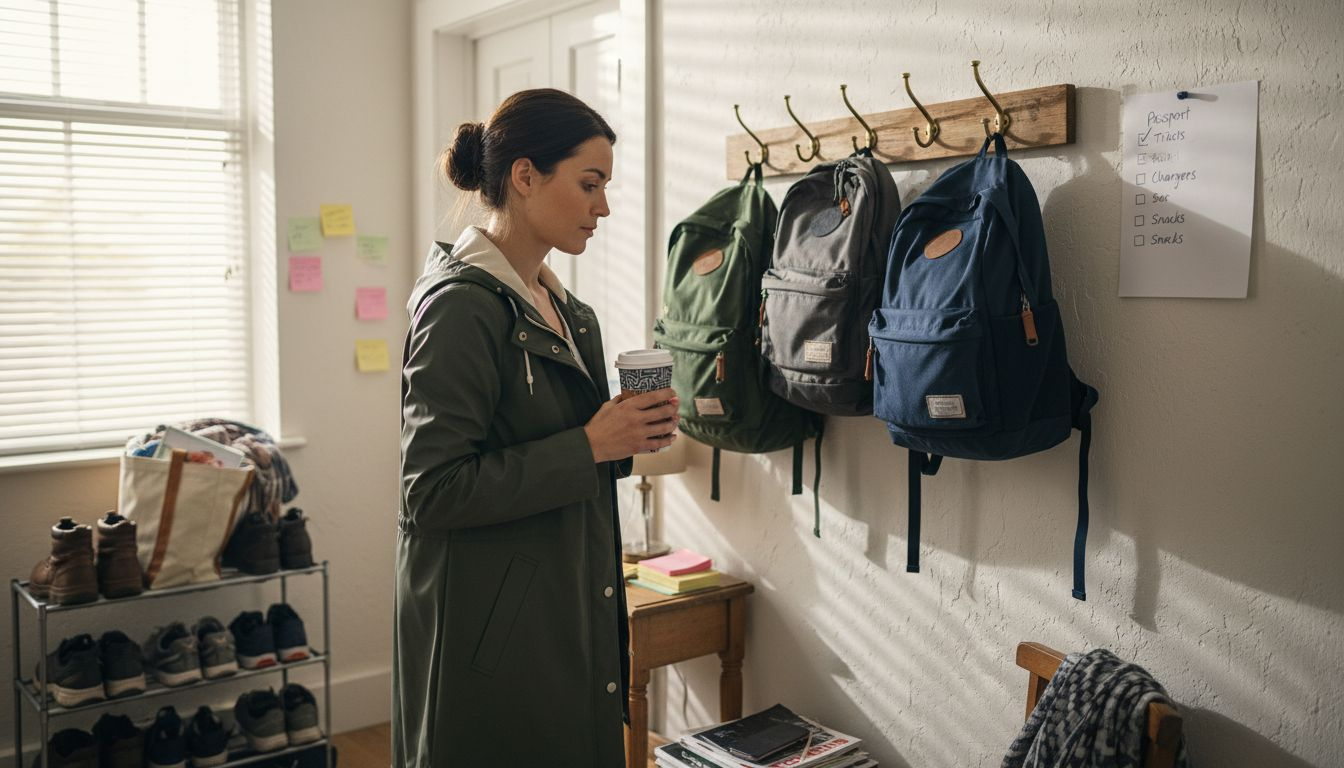
Choosing the right backpack begins with understanding precisely what you need to carry during your typical day. Your backpack isn’t just an accessory - it’s a functional companion that supports your lifestyle and organisational needs.
To effectively assess your daily carrying requirements, start by taking a detailed inventory of items you consistently transport. This means examining not just what you carry, but how much space and protection these items demand. Students might need room for textbooks, laptops, and stationery, while professionals could require space for documents, electronic devices, and personal essentials.
Consider these key factors when evaluating your carrying needs:
- Total weight of items you typically transport
- Specific dimensions of your most important gear (laptop, tablet)
- Protection requirements for fragile electronics
- Organisational needs like separate compartments
- Potential variations in daily load
When planning your backpack selection, understanding volume requirements becomes crucial. Not all backpacks are created equal, and the wrong size can lead to discomfort or inadequate storage. Professional travellers and students alike benefit from carefully matching their backpack’s capacity to their specific daily demands.
A well-chosen backpack adapts to your lifestyle, not the other way around.
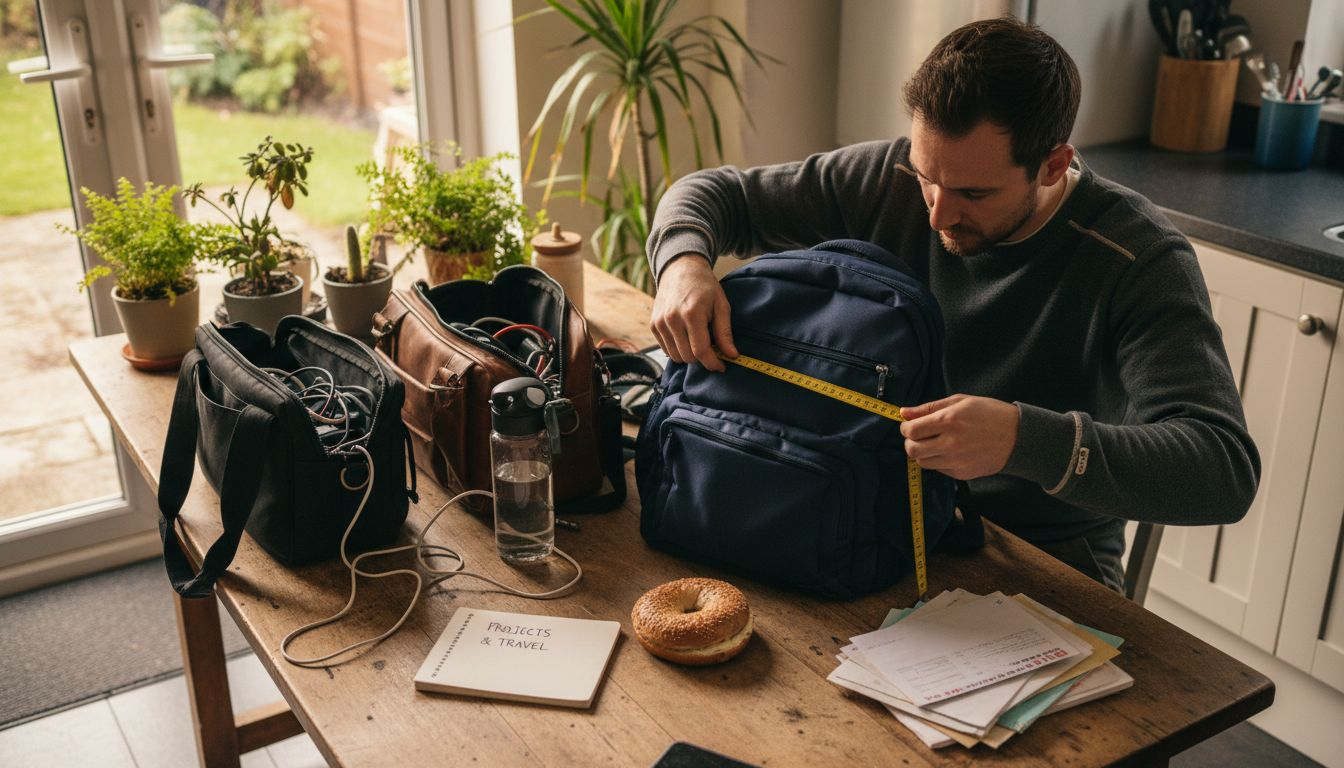
Expert Tip: Before purchasing, physically gather all items you typically carry and measure their collective dimensions to ensure your chosen backpack provides perfect functionality.
Step 2: Select the Ideal Backpack Size and Style
Choosing the perfect backpack involves more than just picking an attractive design. Your ideal backpack must balance functionality, comfort, and your specific lifestyle requirements, transforming from a mere accessory into a reliable daily companion.
Understanding backpack sizing is crucial for finding the right fit. Backpack capacity considerations range from compact 10-litre options for minimalist commuters to larger 25-30 litre designs suitable for professionals carrying multiple devices and documents. Your selection should align with your typical daily load, ensuring enough space without unnecessary bulk.
Here’s a summary of popular backpack sizes and their best use cases:
| Capacity Range | Typical Use | Pros | Cons |
|---|---|---|---|
| 10-15 litres | Daily commutes, minimal gear | Lightweight, easy to carry | Limited space for extras |
| 16-25 litres | Students, office workers | Ample room for devices, books | May feel bulky for light loads |
| 26-35 litres | Travellers, heavy daily loads | Versatile for mixed use | Can be heavy and large |
Consider these critical factors when selecting your backpack style:
- Body shape and height compatibility
- Weight distribution and ergonomic design
- Number and type of compartments needed
- Material durability and water resistance
- Aesthetic that matches your personal style
Modern backpacks offer remarkable versatility. Urban professionals might prefer sleek, minimalist designs with padded laptop compartments, while students could benefit from more robust, multi-compartment styles that accommodate textbooks, electronics, and personal items.
Your backpack should adapt to your lifestyle, not constrain it.
Expert Tip: Always try on a backpack with your typical daily items to ensure comfortable fit and adequate storage before making your final selection.
Step 3: Evaluate Material Quality and Craftsmanship
Selecting a backpack isn’t just about appearance - it’s about investing in a reliable companion that will withstand daily wear and tear. Backpack material durability plays a critical role in determining how well your bag will perform under various conditions.
When assessing material quality, focus on several key indicators of superior craftsmanship. High-performance backpacks typically feature robust materials like reinforced polyester, ripstop nylon, or water-resistant canvas that offer exceptional durability and protection against British weather conditions.
Consider these crucial quality assessment criteria:
- Fabric thickness and tensile strength
- Quality of stitching and seam construction
- Water-resistance and weatherproofing capabilities
- Strength of zippers and hardware
- Resilience of fabric under repeated stress
Professional-grade backpacks distinguish themselves through meticulous attention to detail. Look for reinforced stress points, double-stitched seams, and high-quality zipper mechanisms that demonstrate thoughtful engineering and commitment to longevity.
To help you evaluate durability, here’s a comparison of common backpack fabric types:
| Material | Strengths | Weaknesses |
|---|---|---|
| Polyester | Affordable, weather resistant | Lower abrasion resistance |
| Ripstop Nylon | High tear resistance, lightweight | Can lack waterproofing |
| Canvas | Very durable, classic style | Often heavier, less flexible |
Exceptional craftsmanship transforms a simple bag into a dependable travel companion.
Expert Tip: Gently stretch and manipulate the fabric in-store to test its resilience and check for potential weak points before making your purchase.
Step 4: Compare Comfort and Functional Features
A backpack’s comfort can make or break your daily experience, transforming an ordinary accessory into an essential companion. Backpack ergonomic design goes far beyond simple aesthetics, focusing on how the bag distributes weight and supports your body during extended wear.
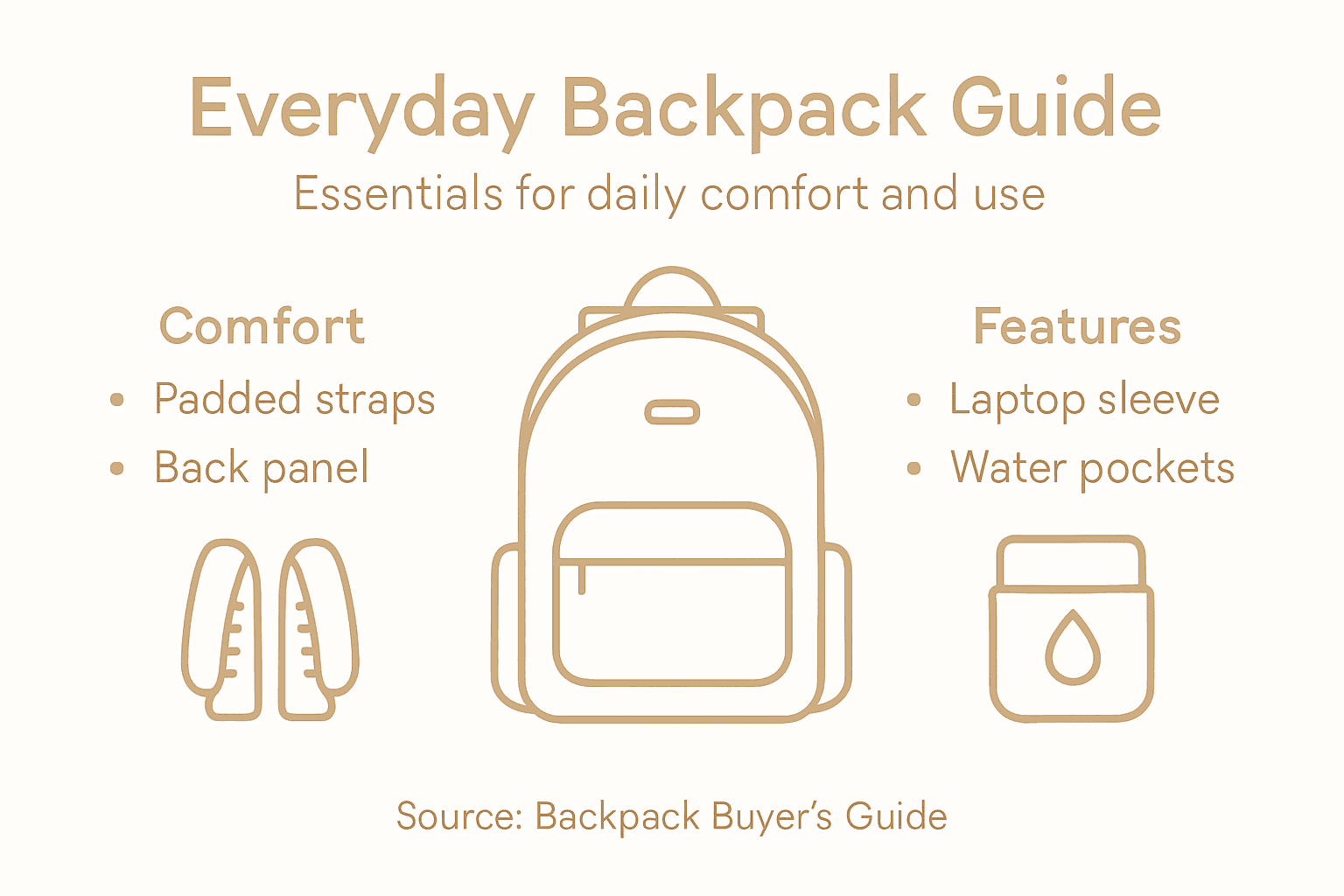
The most comfortable backpacks incorporate sophisticated engineering that prioritises user experience. Key comfort features include strategically padded shoulder straps, breathable back panels that prevent excessive sweating, and adjustable harness systems that adapt to different body shapes and sizes.
Consider these critical comfort and functional elements:
- Weight distribution mechanisms
- Breathability of contact surfaces
- Adjustability of shoulder and chest straps
- Padding thickness and placement
- Ergonomic back panel design
- Number and accessibility of compartments
Professional-grade backpacks distinguish themselves through thoughtful design that anticipates user needs. Look for features like ventilated mesh panels, shock-absorbing shoulder straps, and intelligent weight distribution systems that reduce strain during long commutes or travel.
Comfort is not a luxury - it’s a fundamental requirement for any serious backpack.
Expert Tip: Always test the backpack by walking around and mimicking your typical daily movements to assess true comfort and functionality.
Step 5: Verify Durability with Reviews and Guarantees
Determining a backpack’s long-term reliability requires more than a quick inspection - it demands comprehensive research and strategic evaluation. Backpack durability insights can provide crucial information about a product’s real-world performance and potential longevity.
To thoroughly assess a backpack’s durability, investigate multiple information sources that offer comprehensive perspectives. Professional product reviews, customer testimonials, and manufacturer warranty terms collectively paint a detailed picture of potential performance and potential weaknesses.
Consider these critical durability verification strategies:
- Examine independent product reviews
- Check manufacturer warranty length
- Read customer feedback about long-term usage
- Investigate materials’ proven track record
- Look for specific durability certifications
- Analyse brand reputation for product quality
Professional consumers understand that durability transcends initial appearances. Scrutinise the fine print of guarantees, paying close attention to what specific conditions are covered and for how long. A confident manufacturer will typically offer comprehensive protection that reflects genuine trust in their product’s construction.
True durability is measured not by marketing claims, but by real-world performance.
Expert Tip: Request detailed information about warranty claim processes before finalising your backpack purchase.
Discover Durable Style with Troop London Backpacks for Everyday Use
Choosing the perfect backpack means balancing comfort, durability and stylish design that fits your daily routine. The article highlights challenges like finding the right size, quality materials and ergonomic features so your bag truly supports your lifestyle. At Troop London we understand the importance of functional design combined with timeless aesthetics to make every carry effortless and reliable.
Whether you need a robust canvas backpack from the Heritage collection or a sleek option from our Classic line our expert craftsmanship ensures each piece meets high standards that withstand daily wear. With organic and sustainable materials, padded straps and thoughtfully organised compartments, you can enjoy unmatched comfort while showcasing vintage-inspired style.
Bring your backpack choice to life today at Troop London.

Explore our selection now and find the bag that will not only carry your essentials but become your trusted everyday companion. Act now to benefit from quality craftsmanship designed to last through all your daily adventures.
Frequently Asked Questions
How do I assess my daily carrying needs for a backpack?
Start by taking an inventory of all items you typically transport each day. Consider the total weight, dimensions of key items, and how much protection they require to ensure your backpack can comfortably accommodate your daily load.
What size backpack should I choose for everyday use?
Choose a backpack size based on your typical daily load. For example, a 10-15 litre backpack is ideal for minimal gear, while a 26-35 litre design is better for heavier loads like multiple devices and documents.
What materials should I look for in a durable backpack?
Look for robust materials like reinforced polyester or ripstop nylon that offer durability and protection against the elements. Assess the fabric thickness and stitching quality to ensure your backpack can withstand daily wear and tear.
How can I evaluate the comfort of a backpack before purchasing it?
Test the backpack by wearing it with your usual items and walking around, checking for comfort and fit. Note the placement and thickness of padding, as well as the adjustability of straps, to ensure a comfortable user experience.
What should I consider regarding warranty and durability before buying a backpack?
Investigate the manufacturer’s warranty length and what it covers. Review customer feedback and independent product reviews to gauge long-term performance and potential weaknesses, ensuring you make a well-informed decision.
How do I ensure my backpack is versatile for different daily needs?
Consider your lifestyle and select a backpack style that can adapt to various situations, such as commuting or studying. Look for features that provide ample compartments and comfortable weight distribution to accommodate both work and personal items.